Start an AI receptionist pilot with one administrative job, a named staff owner and a way to stop that job quickly. A useful first pilot might answer approved office questions or capture callback requests. Giving a new system every booking, payment and communication permission at once makes it harder to understand what worked and where staff had to intervene.
The aim is an evidence-based operating decision. The pilot does not need to prove that AI can replace a position or produce a predetermined savings percentage. It needs to show whether a defined workflow is reliable enough for the practice's chosen use.
State the scope in one paragraph
Write down the intended users, channels, allowed answers, allowed actions and excluded situations. Include who reviews unresolved inquiries and what callers should expect when staff are unavailable. Give the team permission to leave a workflow in a limited state if the evidence does not support expansion.
For example: “The pilot answers public administrative questions on website chat and records requests for an administrator to call back. It does not confirm new appointments, answer individual coverage questions or provide clinical advice.” This is a hypothetical scope statement, not a claim that every product exposes precisely these controls.
A proposed two-week pilot sequence
The following schedule is an example a practice can adapt; fourteen days is not an industry benchmark or required trial period.
| Stage | Work | Evidence before moving on |
|---|---|---|
| Days 1–2 | Approve knowledge and staff fallback | Owner signs off on answers and routing |
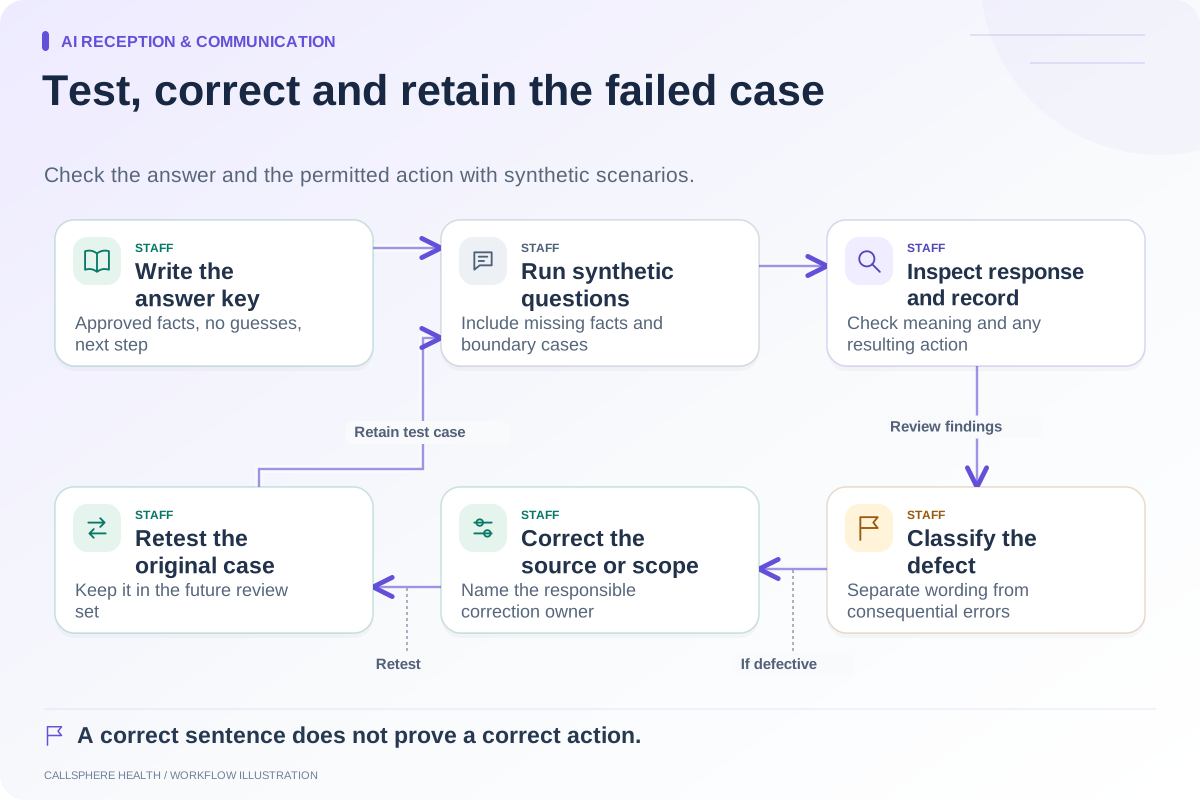
| Days 3–4 | Test synthetic inquiries | Expected responses and failures recorded |
| Days 5–8 | Limited approved production scope | Staff checks actual outcomes securely |
| Days 9–11 | Correct recurring errors | Original failed cases pass retesting |
| Days 12–14 | Decide whether to continue or expand | Written result against initial criteria |
Before any production use, complete the practice's privacy, vendor and configuration review. Keep test inquiries separate from real communications. Do not export patient conversation detail into a general project spreadsheet to make the pilot easier to discuss.
Define stop criteria before success criteria
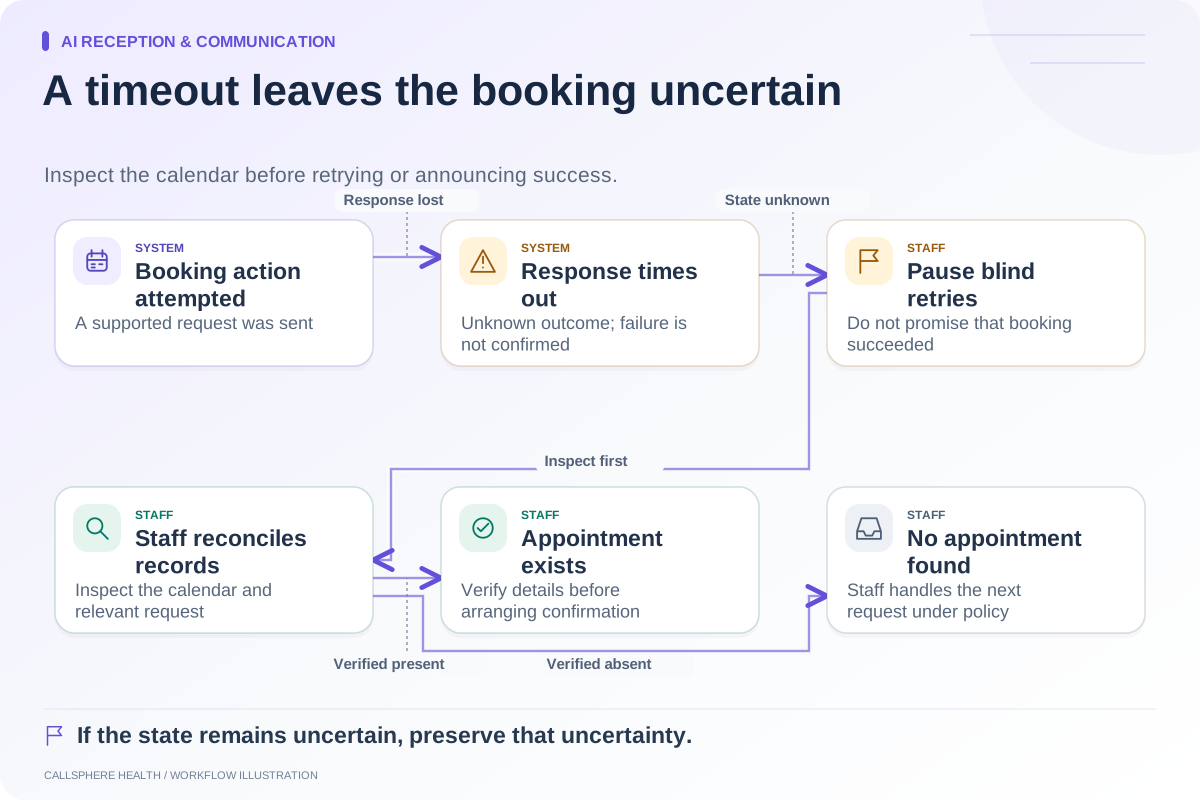
Pause the affected workflow if it exposes someone else's information, presents a request as a confirmed booking, gives clinical advice or repeatedly loses callback requests. The exact response to an incident belongs in the practice's approved procedure. The operational point is that staff should not need a committee meeting to stop an obviously incorrect automated action.
An answer with awkward wording may need an editorial correction. A wrong action may require disabling the action while retaining safe information-only responses. Separate those severities so a cosmetic issue does not obscure a consequential failure.
The fallback planning guide helps define what remains available while a dependency is unavailable or an action is paused.
A hypothetical expansion decision
Suppose the pilot answers opening-hours questions consistently but staff discover that callback requests have no clear owner during lunch coverage. The practice does not expand into booking just because the conversation sounds natural. It first fixes callback ownership and verifies that requests are visible, assigned and resolved.
After that change, the team may test availability checks with synthetic appointments. This is a new permission boundary, so it gets its own expected results. Passing a question-answering pilot does not establish that appointment creation is ready.
Measure the job you selected
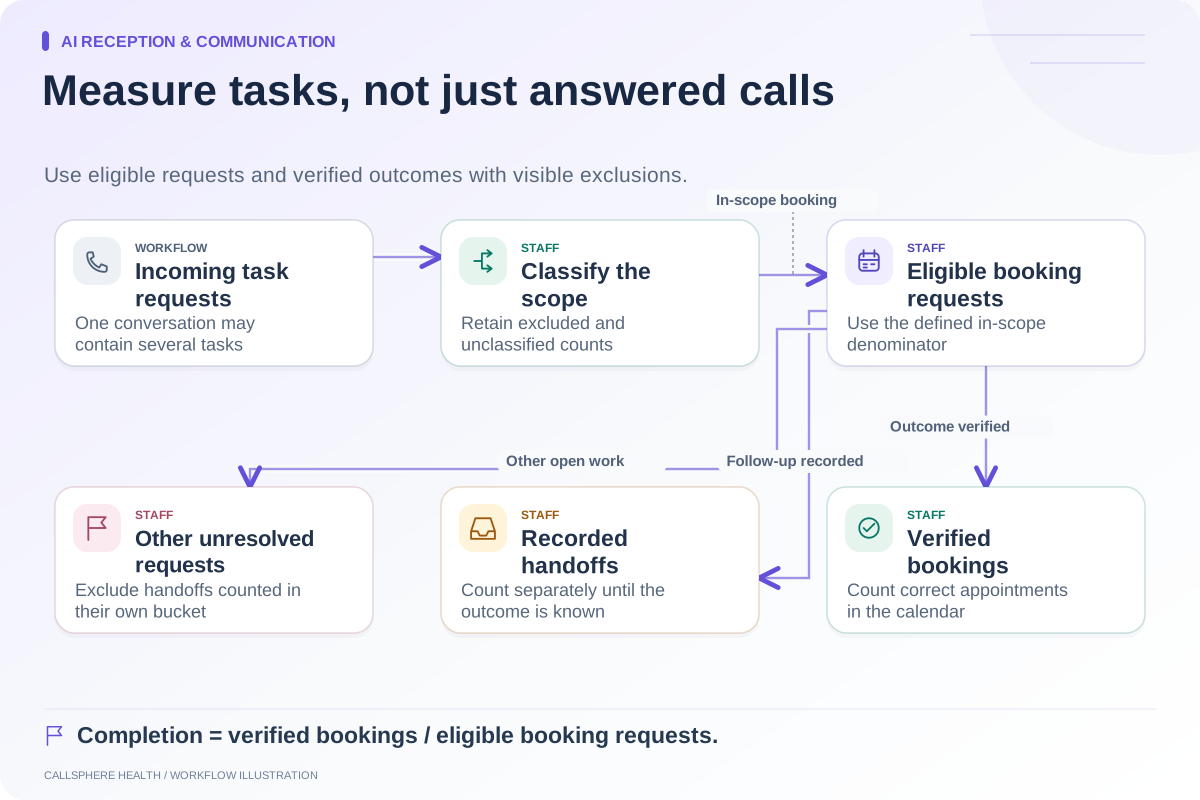
Count eligible inquiries, completed tasks, handoffs, unresolved items and incorrect actions. Keep system delivery failures separate from inquiries outside the approved scope. Record staff correction time if you can do so consistently, without turning estimates into claimed financial savings.
Use the definitions in AI workflow measurement before comparing weeks. A smaller number of calls can make a percentage look unusually good or bad; retain the underlying counts and describe the limited sample.
The NIST AI Risk Management Framework is an external reference for structured AI risk management. The pilot plan above is our operational recommendation, not a certification or a guarantee of performance.
CallSphere Health offers an AI receptionist with configuration-dependent administrative workflows. Bring the proposed pilot paragraph to a demo and ask to see the allowed action, the refusal boundary and the callback record. Browse AI reception and communication for additional launch worksheets.
Sources and product scope checked September 9, 2026.