An AI receptionist outage plan should specify which information remains available, which actions stop and how staff recover unfinished requests. “Contact support” is only one part of the plan. The practice also needs to know what a caller hears when the booking service is unavailable and how staff discover whether an interrupted action actually succeeded.
Treat conversation, phone routing, calendar access and message delivery as separate dependencies. One can fail while the others remain available. A receptionist that can still answer a question may nevertheless be unable to reserve an appointment.
Build a degraded-service matrix
Use the following matrix as a proposed planning worksheet. Each practice should replace the fallback with a route it has actually configured and tested.
| Unavailable component | What may remain possible | What should pause | Staff verification |
|---|---|---|---|
| AI conversation service | Existing phone-system fallback | AI dialogue and tool actions | Test the fallback destination |
| Calendar availability | Approved public information | New booking promises | Confirm calendar access returns |
| Appointment write response | Conversation may continue | Retry or success announcement | Inspect actual appointment state |
| Message transport | On-screen next-step explanation | Claimed email or SMS delivery | Review delivery evidence |
| Knowledge source | Configured staff contact route | Answers requiring missing facts | Restore approved content |
The key word is “may.” A vendor must demonstrate which fallback is available in your configuration. Do not assume that a telephone number automatically rolls over to staff, or that an email queue persists every failed message.
Design the caller's answer before an incident
For an unavailable calendar, appropriate wording could be: “I cannot confirm an appointment right now. Please use the practice's stated contact route for scheduling help.” If the system has successfully recorded a callback request, it can say that request was recorded. It should not imply that a staff member has accepted it or promise a response time the practice has not approved.
Keep emergency guidance aligned with the practice's public policy. Administrative AI does not become a clinical triage service when another system is down.
A hypothetical uncertain booking
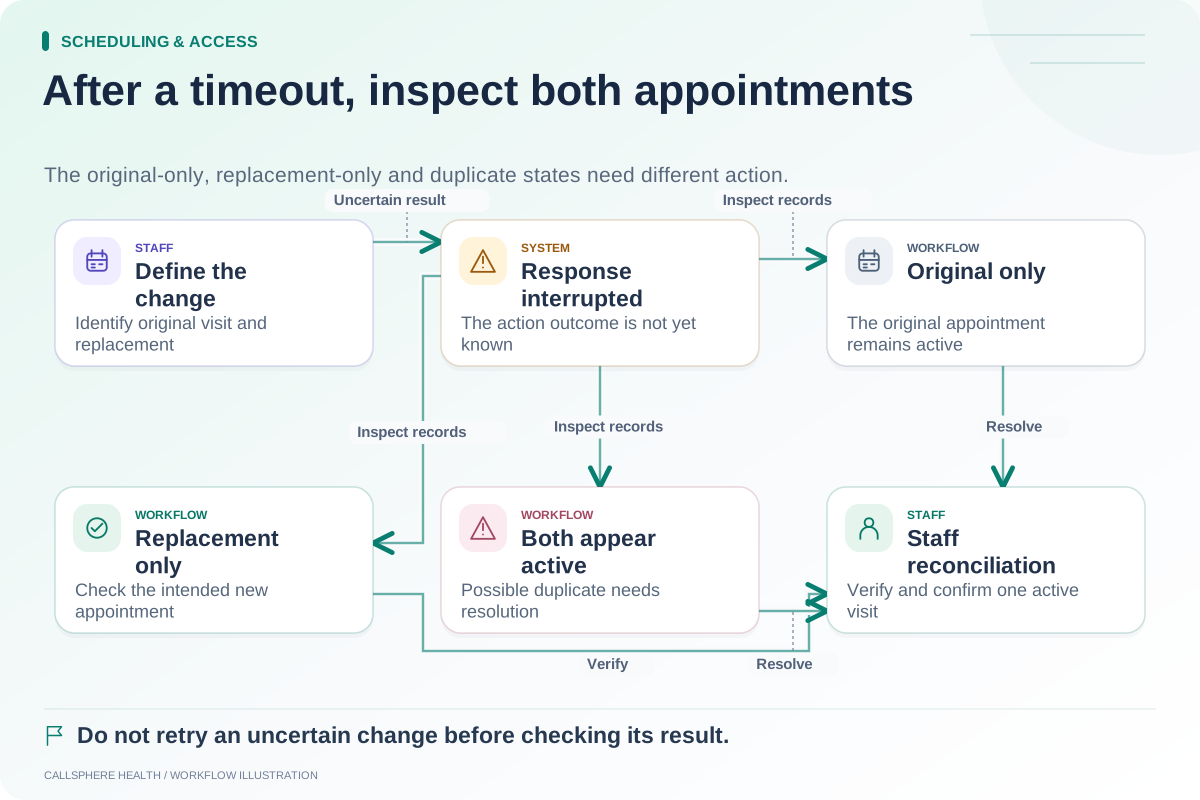
A fictional practice's receptionist checks an available slot and sends a booking request. The connection then times out before a clear response returns. This is different from a confirmed rejection: the appointment may or may not have been created.
The next step is reconciliation, not repeated blind retries. An authorized employee checks the calendar and relevant request record. If the appointment exists, staff verify its details and arrange the appropriate confirmation. If it does not exist, staff handle a fresh booking according to policy. If the state remains uncertain, staff preserve that uncertainty in their communication.
The rescheduling checklist addresses a related problem in which the old and replacement appointments must both be checked.
Give the incident an owner and a restart rule
Name the person who can pause the affected workflow, the person who checks pending requests and the person who approves restarting it. In a small practice, one administrator may fill several roles, but the responsibilities still need to be explicit.
Record the affected period and the type of failure without copying patient details into a general incident document. Authorized staff can reconcile individual requests inside the protected operational system. Track the count of unresolved requests separately from the count of technical errors; one error can affect several tasks, and one task can generate several errors.
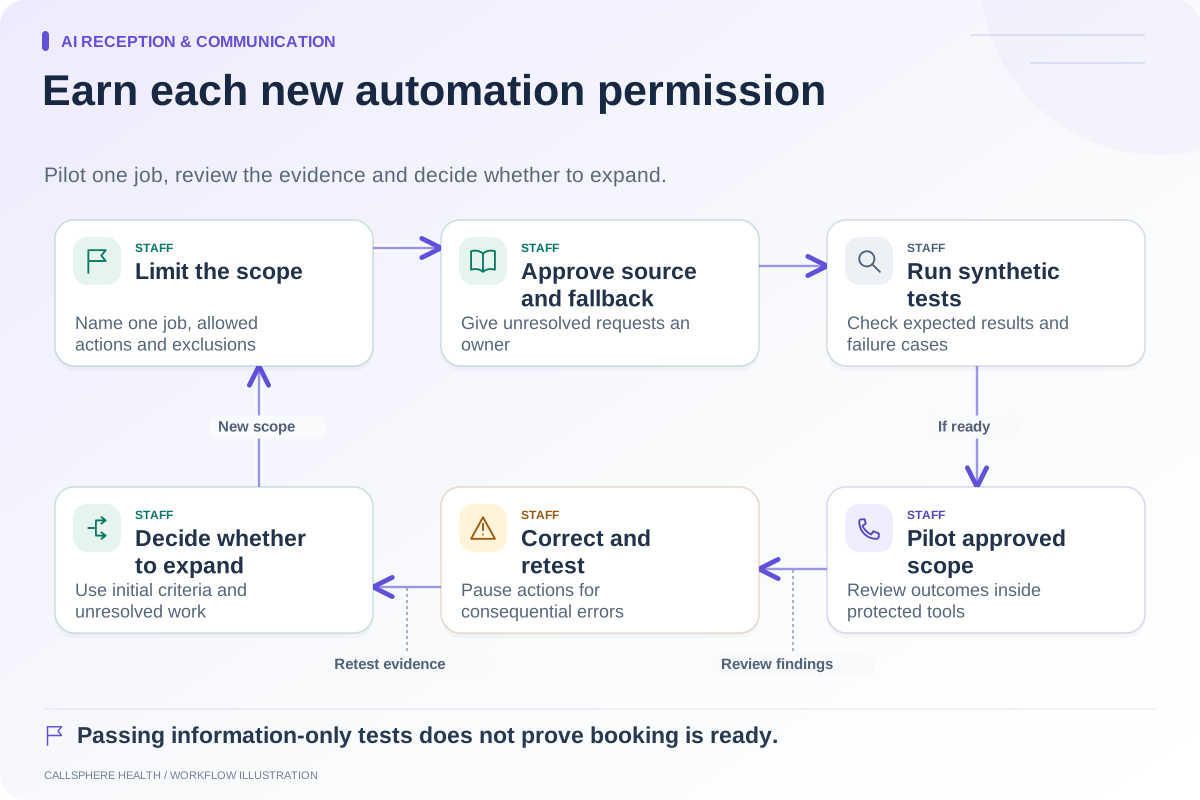
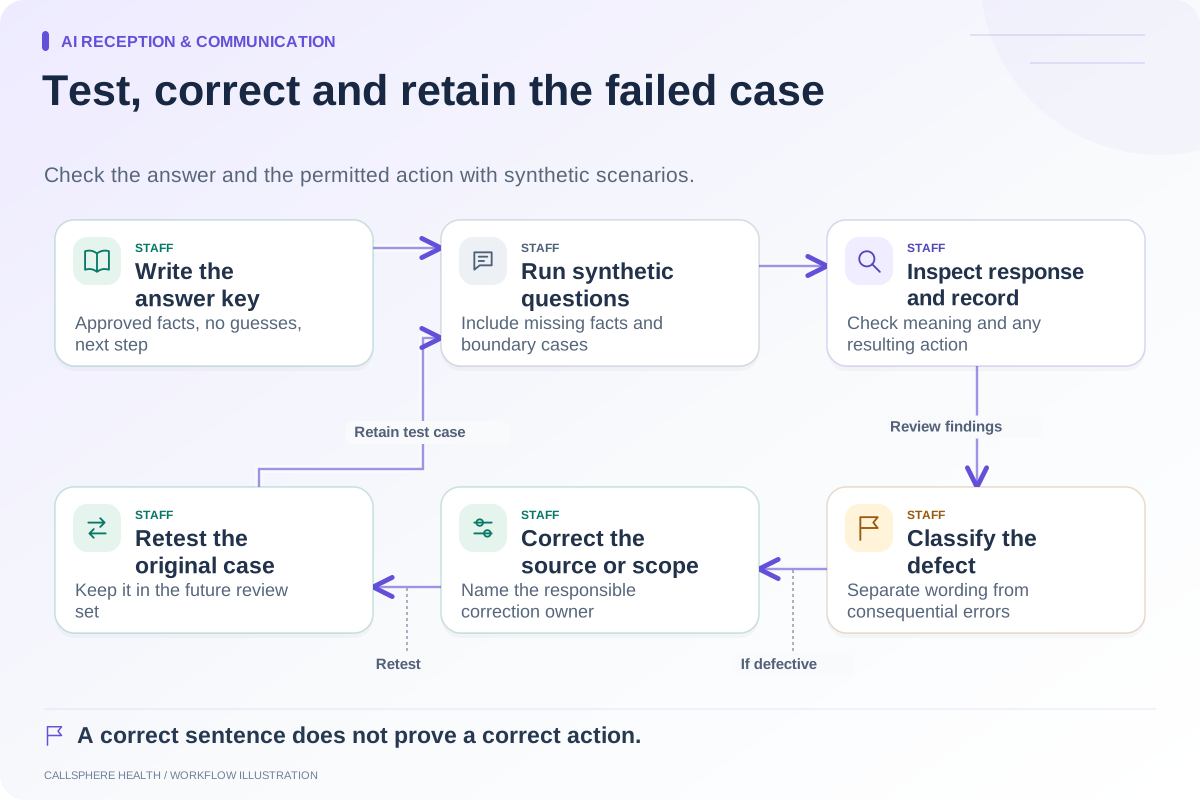
Restart only after a synthetic test proves the dependent action works and the pending queue has an owner. An “all systems operational” page is useful context, but it does not tell you whether your practice's credentials, routing and outstanding requests are correct.
Make fallback part of software evaluation
The NIST AI Risk Management Framework is a general reference for AI oversight. This article's matrix is a practical proposed procedure, not a guarantee of resilience.
CallSphere Health's AI receptionist depends on configured AI, telephony and practice services. Its capability boundaries distinguish a callback record from a completed staff response. Ask to see an unavailable calendar and an interrupted booking in an isolated demonstration before deciding the workflow is ready.
Include that demonstration in a limited launch pilot, and use the AI reception and communication collection to prepare staff procedures alongside the software configuration.
Sources and product scope checked September 9, 2026.