A useful phone-to-chat handoff carries enough administrative context to avoid unnecessary repetition, while requiring fresh identity checks before revealing or changing patient-specific information. The fact that someone knows the details of an earlier conversation does not prove that they are the same person. Design continuity and identity verification as separate steps.
For a prospective client asking about office hours, a simple reference to the public answer may be enough. For an existing patient requesting an appointment change, the receiving channel needs the practice's authorized verification process before it retrieves or changes that person's appointment.
Decide what context actually needs to travel
Do not make “send the whole transcript” the default handoff instruction. Staff often need a much shorter summary: the administrative request, its status, the promised next step and any outstanding verification. A long narrative can bury the most important unfinished action.
Use this proposed handoff record when evaluating software or designing staff procedures.
| Field | Example content |
|---|---|
| Request reference | Internal inquiry identifier |
| Administrative intent | Asking for a new appointment time |
| Current state | No change made; verification pending |
| Relevant preference | Prefers afternoon appointments |
| Action already taken | Callback request recorded |
| Next owner | Scheduling administrator |
| Identity status | Must be verified in receiving channel |
Keep clinical history, diagnoses and unrelated details out of a general inquiry summary. The information needed by an authorized clinical workflow is a separate question that should be handled within that workflow.
A hypothetical channel switch
An invented caller, Jordan, asks the phone receptionist whether evening appointments exist. The receptionist explains the practice's public process and records a callback request. Later, someone enters website chat and says, “I called earlier; can you move my appointment?”
The chat can acknowledge the request to continue, but it should not reveal an appointment based on that statement. Staff or the configured verification process must establish identity and authority. If verification cannot be completed, the safe operational outcome is a clearly labeled follow-up request, with no claimed appointment change.
If Jordan is a new inquiry rather than an existing patient, staff should not create a duplicate client record simply because a second channel was used. In a demo, ask the vendor to show how duplicate inquiries are recognized and how uncertain matches are held for review.
Separate three kinds of continuity
First is conversational continuity: the next person understands what was discussed. Second is workflow continuity: the next person knows which task remains open. Third is record continuity: the system has correctly associated the inquiry with the authorized client record.
A product may support one without proving all three. Stored transcripts are useful evidence, but they do not establish that cross-channel identity matching or automatic record merging is implemented. Ask to see the actual record and its status instead of accepting a diagram of connected channels.
HHS describes circumstances in which vendors handling protected information for a covered entity are business associates in its business-associate guidance. Resolve the applicable vendor and information-handling arrangements before routing real patient conversations across additional services. This article supplies an operational handoff design, not a legal determination about a particular integration.
Test the awkward transitions
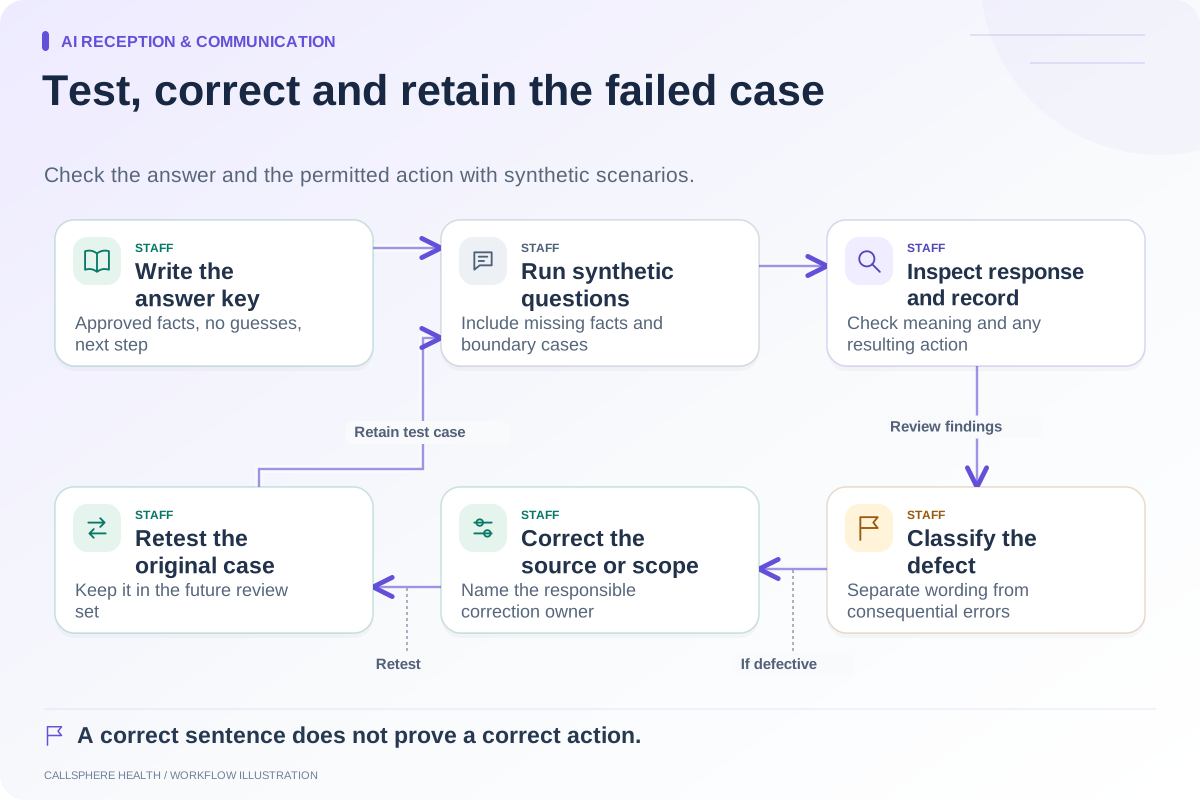
Use synthetic inquiries to test a misspelled name, a shared contact number, a conversation with no reference number and a request made by another person. Verify that the system does not expose prior conversation content to an unverified visitor. Also test a handoff after the original staff member has left for the day.
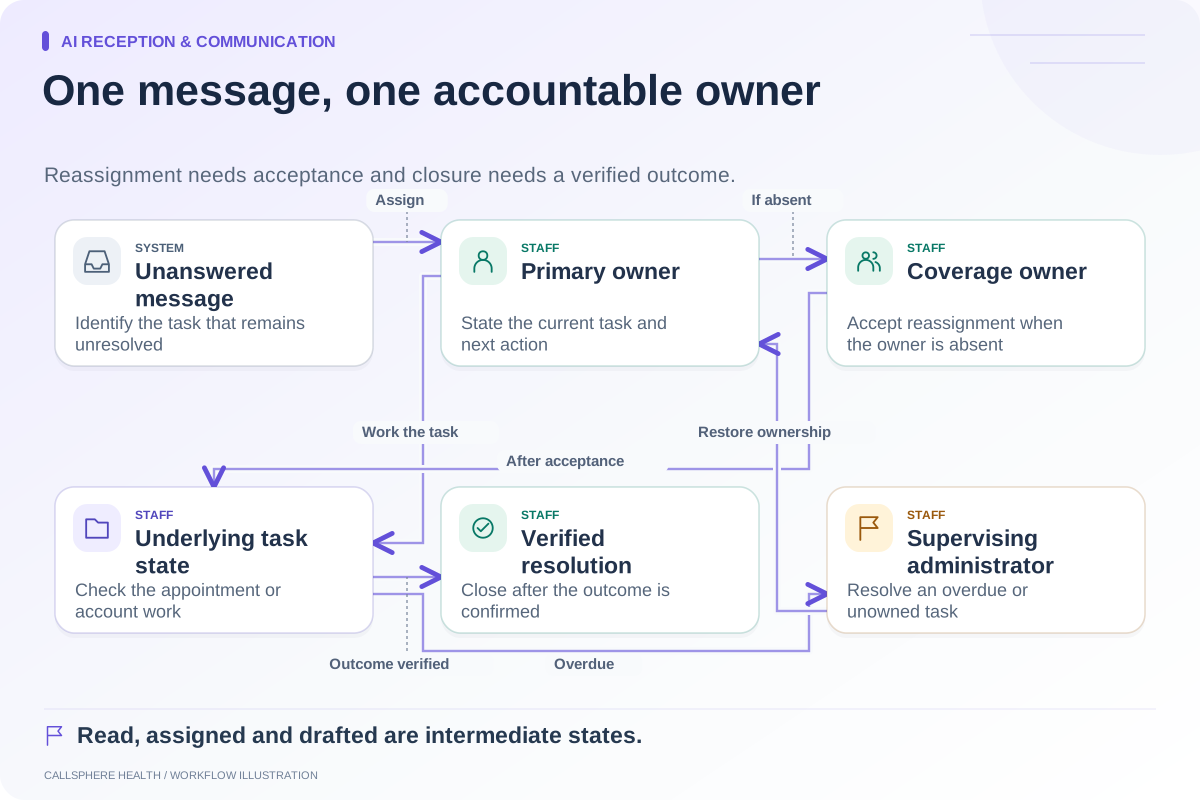
The receiving owner should see whether a task is new, already resolved or awaiting more information. Otherwise two employees may send conflicting replies. Establish the rules in message response ownership before adding another channel.
CallSphere Health's AI receptionist supports configured phone and website conversations and staff follow-up records. Automatic identity merging between channels is not established by that capability alone; inspect the verified scope and request a synthetic handoff demonstration for your intended setup.
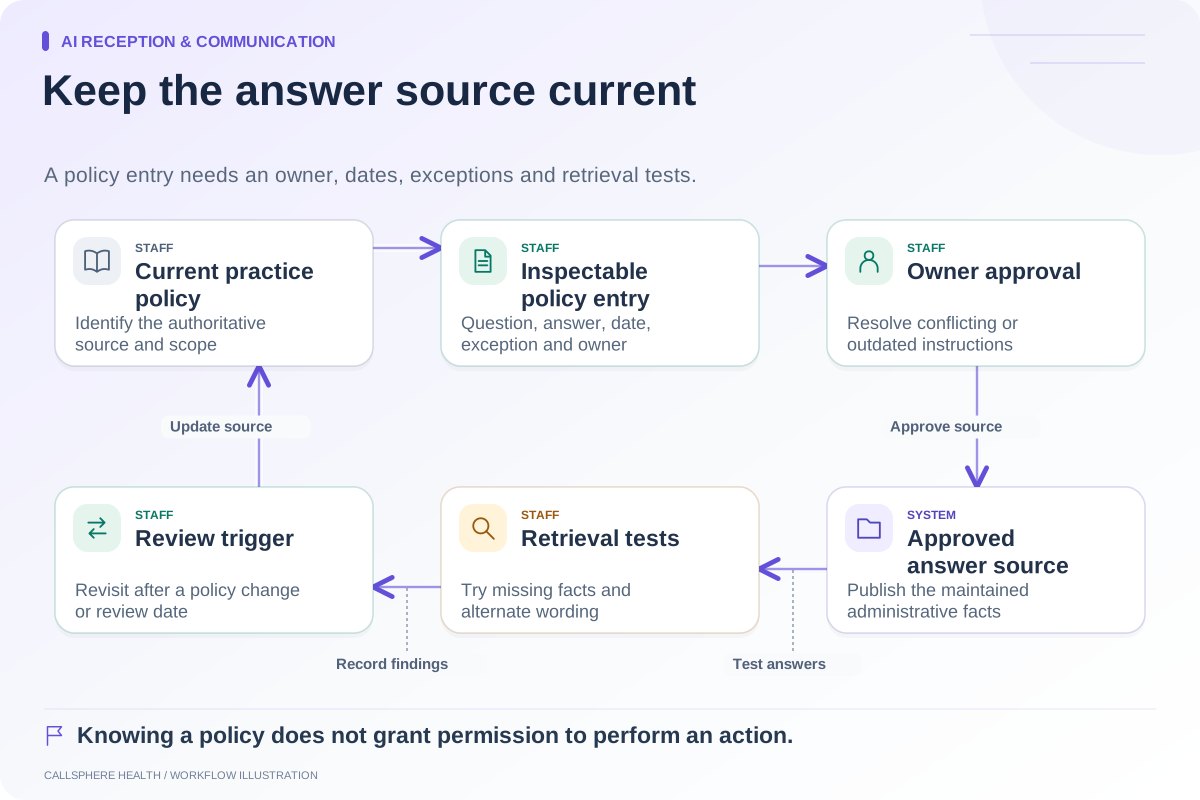
Prepare the shared administrative answers with the knowledge-base worksheet, and find related workflows in AI reception and communication. Ask for evidence of what the receiving staff member actually sees before deciding that the conversation continues successfully.
Sources and product scope checked September 9, 2026.