Design an AI receptionist handoff by specifying when automation stops, what information reaches staff, who owns the next action, and what the caller is told. Name the actual mechanism: a callback request, task, message, contact route, or live transfer. Do not use “handoff” as a substitute for explaining whether a person is immediately available.
The objective is continuity. Staff should be able to understand the administrative request without asking the caller to repeat every detail, while still verifying information and making decisions within their role.
Define triggers your team can recognize
A handoff may be needed when the requested action is outside the configured scope, identity cannot be established, availability cannot be confirmed, or a service fails. It may also be the correct default for a new-patient fit review. These triggers should be written as operational rules rather than broad instructions to “use judgment.”
Clinical advice, diagnosis, and treatment decisions belong outside the administrative AI workflow. The practice should define appropriate contact guidance and staff handling for those requests. Do not describe an administrative handoff as automated clinical triage.
Build a compact handoff packet
| Field | Purpose | Example using fictional details |
|---|---|---|
| Request type | Helps staff choose the next task | New appointment inquiry |
| Caller-provided contact | Enables approved follow-up | Controlled test callback number |
| Relevant administrative preference | Avoids repeated questions | Evening appointment requested |
| Action attempted | Shows what already happened | Availability lookup did not complete |
| Current state | Prevents false assumptions | No appointment confirmed |
| Reason for handoff | Explains why staff are needed | Provider settings require review |
| Owner and due window | Makes responsibility visible | Scheduling queue; next staffed period |
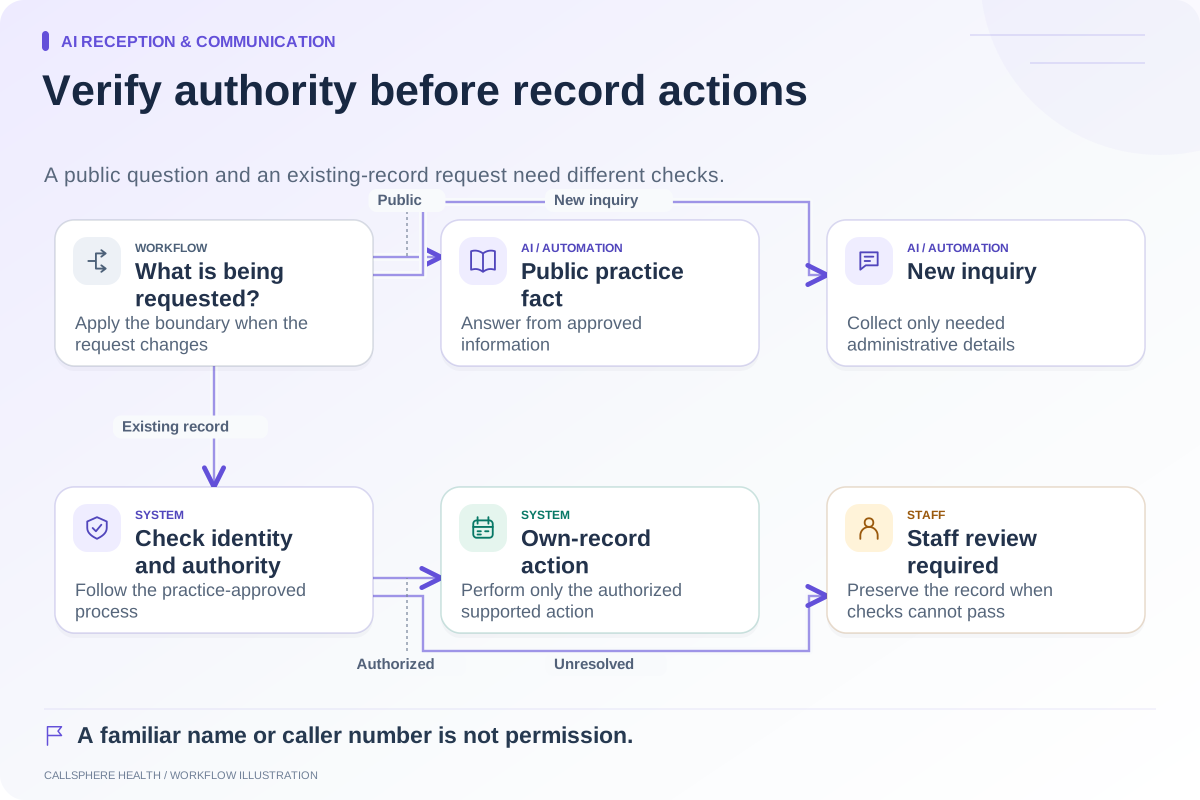
Collect only information needed for the administrative purpose. Do not turn a handoff packet into an invitation for a detailed clinical narrative. Staff should verify caller-provided details before using them to disclose or change existing account information.
Make the caller's expectation match the packet
In a hypothetical interaction, the AI cannot finish an appointment change. It records a callback request and provides the practice's configured contact route. The closing message should state that the original appointment has not been changed unless the system has evidence otherwise.
A phrase such as “I'll connect you now” would be inaccurate if only a message was saved. A better administrative response explains the request was recorded, what remains unchanged, and how the practice handles follow-up. Use a response-time statement only when the practice has established that expectation.
Distinguish receipt from resolution
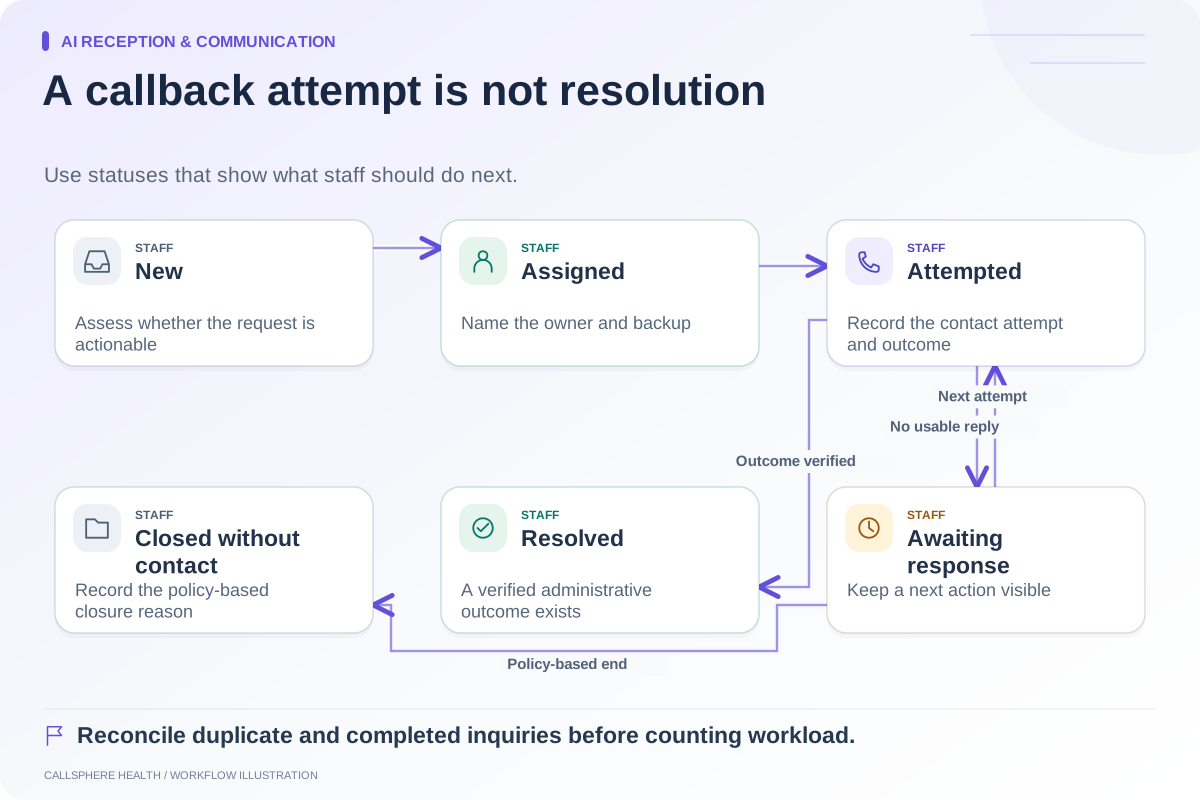
A task created in a system has been recorded. A notification sent to staff may have been delivered. A staff member opening it may establish acknowledgement. None of those states alone proves that the caller's request is resolved.
Use statuses that separate these events. Assign a backup when the normal owner is absent. If a task moves from scheduling to billing, preserve the current state and reason for reassignment so both teams do not act independently on the same request.
HHS's business-associate guidance is relevant when third-party services handle protected health information. Have appropriate reviewers assess the actual data flow and agreements. Source reviewed September 9, 2026; the packet above is an original operational example.
Check the handoff with staff, not just the demo host
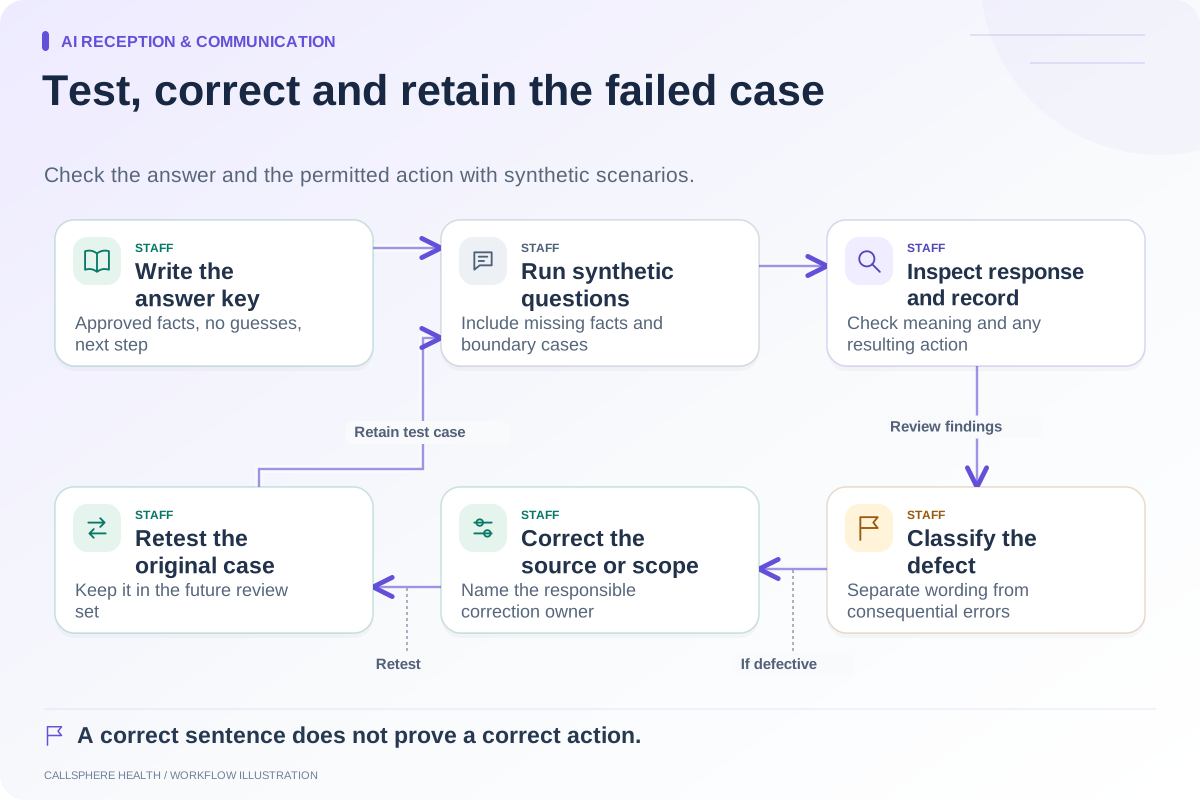
Run one fictional request that cannot complete. Inspect the saved packet, then have the intended staff role locate it and explain the next action. Test absence coverage and a duplicate inquiry through a second channel.
CallSphere Health supports recording callback/handoff requests and making configured staff contact information available. Current evidence does not establish a live warm telephone transfer or that every recorded event produces an acknowledged notification. Its capability overview makes those limitations explicit.
Ask for a demonstration of the exact queue or message your staff will use. If staff cannot reliably find the request, keep the workflow in a limited pilot until ownership and visibility are resolved.
Improve the handoff by reviewing uncertainty
During a pilot, review which packets made staff ask avoidable follow-up questions. Was the requested action missing? Was a failed booking summarized as successful? Was the next owner unclear? Correct the field or rule that caused the gap rather than collecting more information indiscriminately.
The call-summary checklist helps assess the packet's quality. Explore the AI receptionist workflow with one concrete exception scenario so the demonstration can prove how work reaches your team.
Browse more guides to AI reception and communication.