Define phone identity checks according to the information or action requested. General practice hours can be handled differently from an existing patient's appointment details or account balance. Before an identity-dependent action, use the practice's approved verification and authorization process. If it cannot complete, stop that action and provide an appropriate staff route rather than improvising around the check.
This is a workflow-design framework for practice owners. Qualified privacy, legal, and clinical staff should review the actual policy and any circumstances involving representatives or dependent patients.
Build an information-access ladder
The ladder helps staff and vendors distinguish a public question from a request involving an existing record. It does not prescribe a particular set of identifiers or claim that one method is sufficient for every situation.
| Request level | Example | Boundary to define |
|---|---|---|
| Public administrative information | “When does the office open?” | Answer from approved practice facts |
| New inquiry | “How do I request a first visit?” | Collect only needed administrative information |
| Existing appointment information | “What time is my visit?” | Required verification before disclosure |
| Existing appointment change | “Move my appointment” | Verification plus authority for that record |
| Account or representative request | “Tell me about someone else's balance” | Appropriate authorization and staff review |
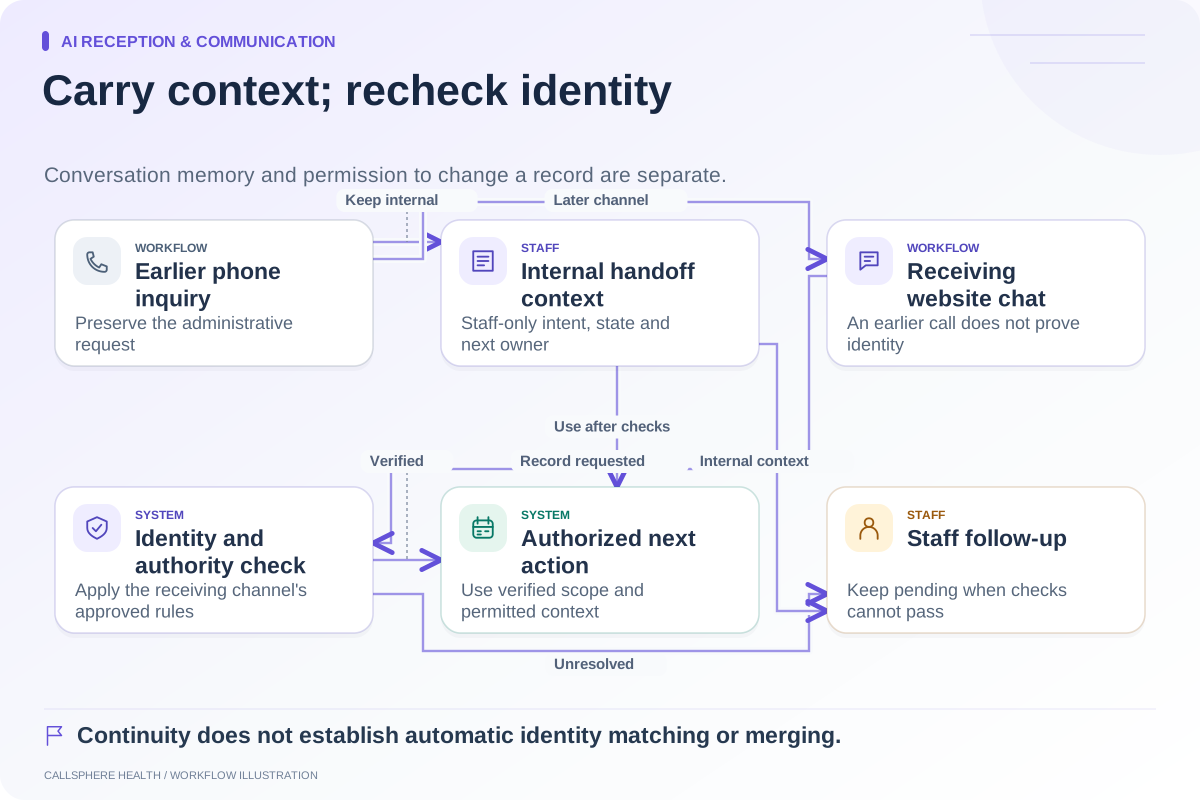
Knowing a patient's name, a visible caller number, or a preferred time should not automatically be treated as permission to access the record. The policy must describe the actual checks and the outcome when they fail.
Distinguish identity from authority
A caller may establish who they are without establishing that they can act for another person. A family relationship stated during a call is not the same as verified authority in the practice's records. Staff need a process for checking the relevant relationship and permissions rather than relying on conversational confidence.
In a hypothetical test, Taylor Test asks to cancel an appointment for another adult. The system should not perform the change merely because Taylor knows the appointment time. It should follow the approved authorization route and preserve the appointment if that route cannot establish permission.
Keep the test fictional. Do not use real family or patient records to probe a prospective vendor's behavior.
Define the failed-check response
A verification failure should not become a challenge in which the assistant keeps revealing clues. Ask the vendor what information is shown or spoken before the check is complete and how repeated unsuccessful attempts are handled.
The response can explain that the action cannot be completed through the current conversation and provide the configured staff route. A callback request, if appropriate, should state that the existing appointment or account was not changed. Staff can then handle the request through the practice's approved process.
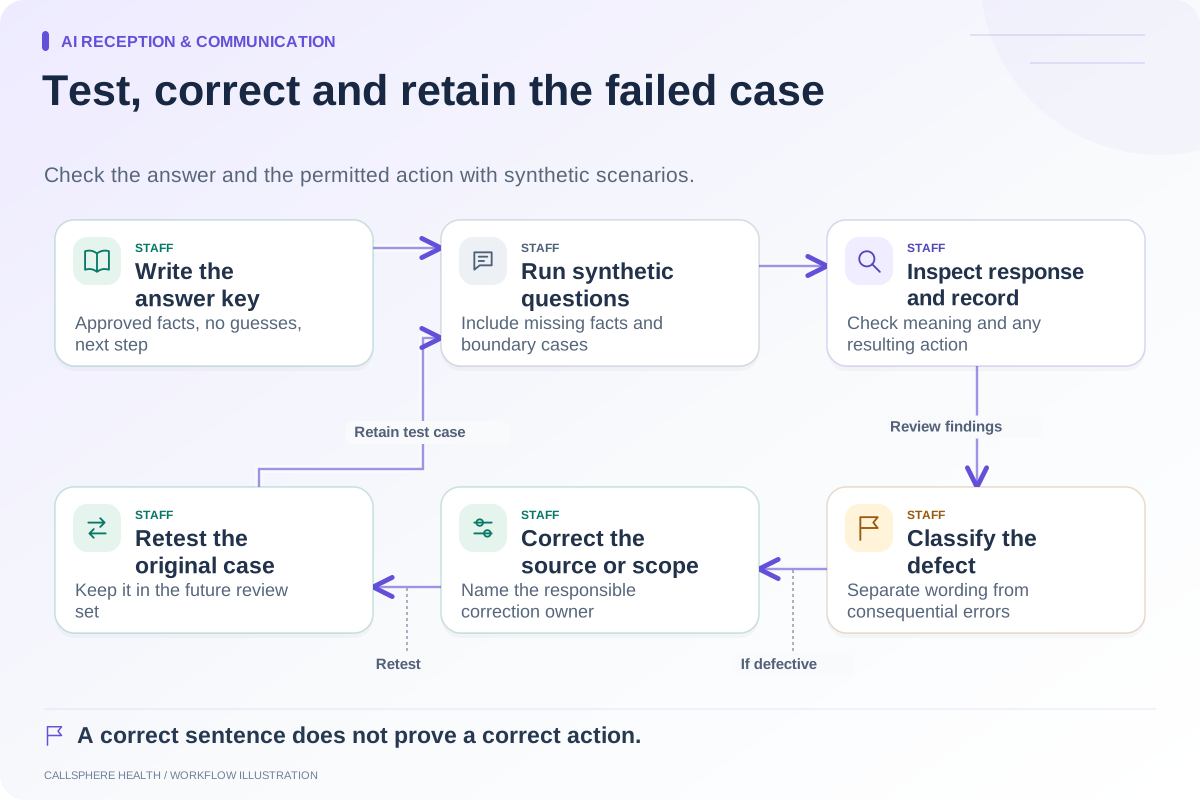
Test both successful and denied actions
Use two fictional accounts in a controlled environment. Verify that the permitted adult can access only their own supported appointment and that a request for the second account does not bypass authorization. Inspect the resulting records as well as the assistant's words.
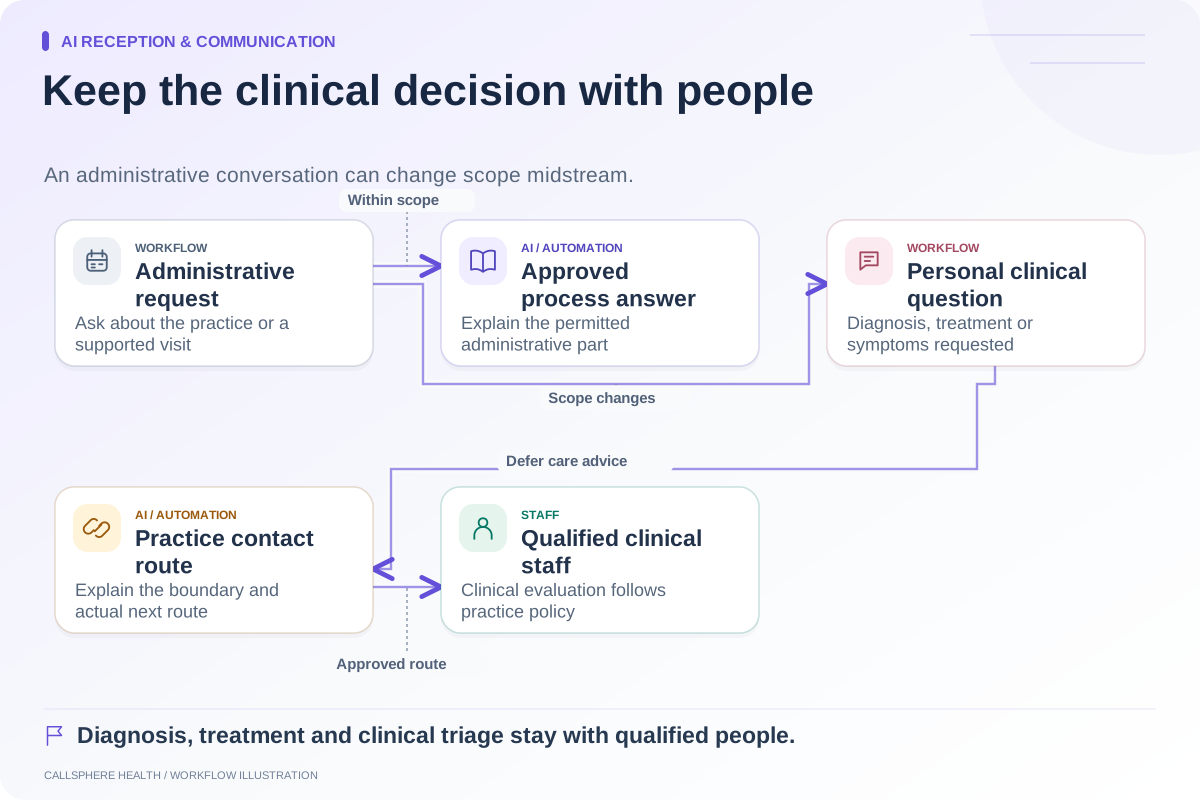
Also test an expired or incomplete verification flow, an unavailable upstream service, and a caller who switches from a general question to an account-specific request. The system should apply the boundary at the moment it becomes necessary, not assume the whole conversation has one permission level.
HHS's cloud-computing guidance supports broader review of safeguards, responsibilities, and relevant agreements. It does not certify a particular identity-check implementation. Source reviewed September 9, 2026.
Understand CallSphere Health's current scope
CallSphere Health supports identity-dependent tools for a verified adult's own appointment lookup, rescheduling, cancellation, and certain balance/payment-link requests. Membership authorization and connected-service outcomes matter. This does not establish unrestricted family access or permission to modify any record mentioned by a caller.
Its administrative AI directs minors to an adult without collecting their data and does not provide clinical advice or triage. Staff should review the applicable practice workflow and available contact route. The capability overview describes the supported boundaries.
Give staff an audit-friendly decision record
Record the action requested, whether the required process completed, what action occurred, and the next owner if it did not. Avoid including unnecessary verification secrets in broadly visible summaries. A scheduler should be able to see “appointment unchanged; staff verification required” without seeing details they do not need.
Use the human handoff guide to define the next step and the AI receptionist page to prepare a synthetic permission-boundary demonstration. Reliable refusal to perform an unauthorized action is part of a useful administrative workflow.
Browse more guides to AI reception and communication.