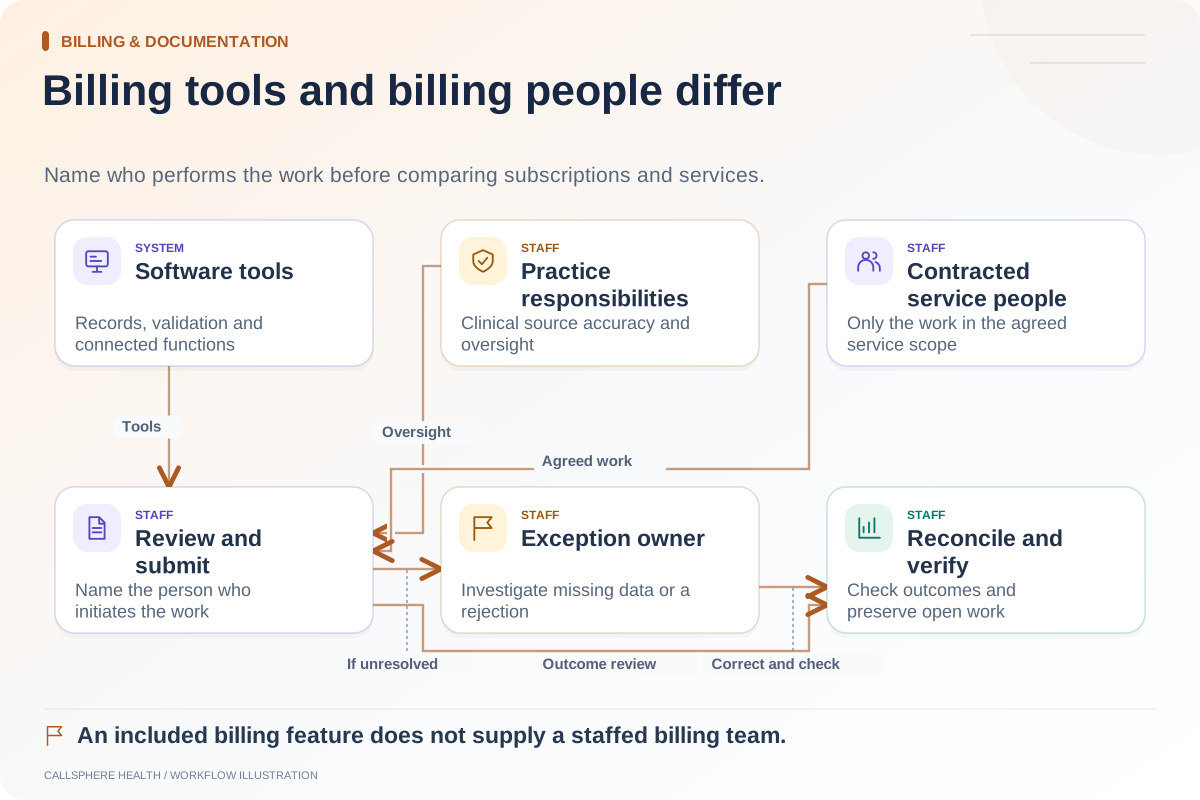
Create a billing exception queue that identifies the unresolved item, the responsible person and the next action. A report of rejected or unpaid work is not a queue unless someone can determine what to do with each row and how to verify closure.
The goal is to prevent work from disappearing between intake, clinical documentation, billing staff and external services. The queue should make waiting visible without treating every delay as the same problem or encouraging indiscriminate resubmission.
Choose the minimum useful fields
| Field | Why it belongs in the queue |
|---|---|
| Controlled record reference | Connects the task to the correct billing work |
| Exception category | Distinguishes missing data, setup, response, reconciliation and other problems |
| Current owner | Names the person or staffed team responsible |
| Next action | Describes the authorized work needed |
| Waiting on | Separates internal work from external response or client information |
| Opened and reviewed dates | Shows age and whether someone has examined it |
| Closure evidence | Explains why the issue is resolved |
Keep clinical and financial detail in the appropriate controlled record. A broadly visible queue label should not reproduce a therapy note or a complete insurance document.
Separate “waiting” from “unassigned”
An item waiting for a known response can have an owner and a planned review date. An unassigned item has no accountable next step. Treat those states differently during the daily or weekly review.
The review frequency should match the practice’s work and applicable deadlines. Do not use a generic software default as a substitute for payer-specific or contractual requirements. Qualified billing staff should determine those obligations.
A hypothetical aging review
A practice reviews three synthetic exceptions. One lacks a policyholder detail and belongs to the billing coordinator, who has an approved information request open. Another has a recorded external status but needs reconciliation. A third has no owner because it was created during a staff absence.
The first item needs a follow-up check, the second needs accounting review and the third needs assignment. Sorting solely by dollar amount would not reveal all three operational problems. Sorting only by age could also miss the newly unassigned item.
The example does not predict recovery amounts or collection speed. It demonstrates how a queue helps staff identify different actions without assuming every exception is recoverable in the same way.
Make closure evidence specific
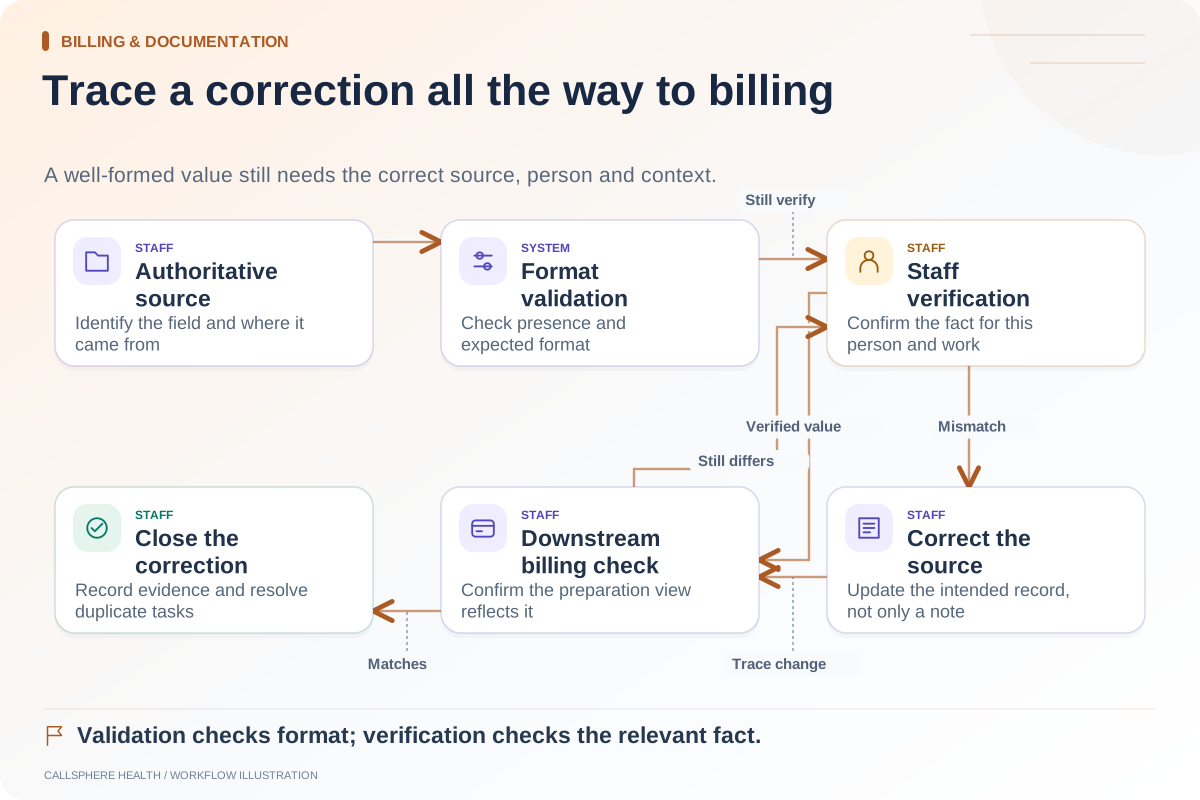
“Reviewed” is not always “resolved.” If staff inspected an item and still needs information, update the review date and next action while keeping it open. When a correction is made, verify the relevant downstream state before closing the task.
For an external claim status, retain the response reference and its meaning. CMS describes claim-status inquiries; receiving information does not itself perform the staff action needed to resolve an exception.
For a reconciliation issue, identify the ledger result reviewed by authorized staff. Do not close the item simply because money appeared in a payment report if allocation remains uncertain.
Avoid repeated work
Before creating another task, check whether the same exception already has an owner. When a case is reassigned, preserve the investigation summary and prior actions in the controlled record so the next person does not repeat them unnecessarily.
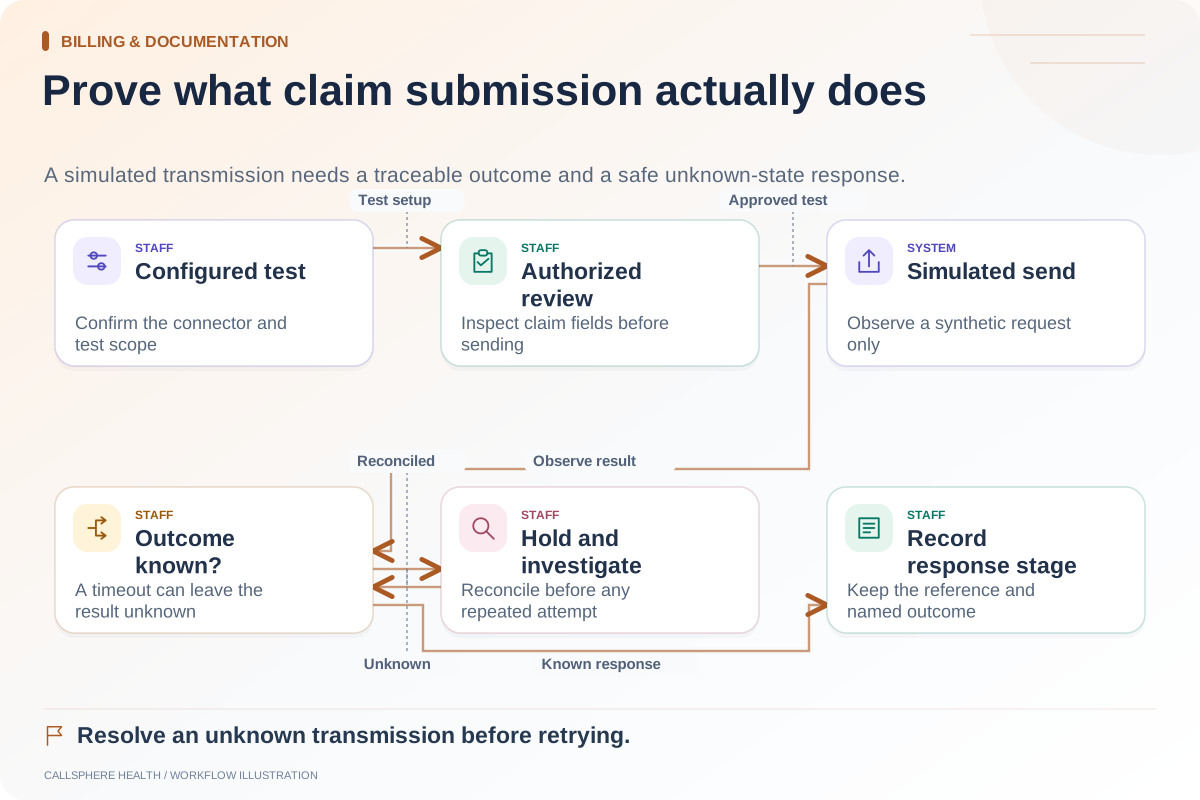
A retry should follow the supported process and the known status. An unknown transmission outcome needs investigation, not automatic resubmission without context. The queue should make that distinction readable to the next staff member.
Measure the queue’s usefulness
Track unassigned items, items without a next action, age by category and reopened tasks. These measures show process quality. Do not present a reduction in queue size as increased revenue unless the financial result was independently reconciled.
CallSphere’s platform provides billing and operational workspaces, with limits described on the capabilities page. Ask a demo team to show how your proposed categories and responsibilities are represented in the actual configuration.
Use one missing-data case, one unresolved response and one reconciliation issue. The evaluator should be able to identify the owner and next step without a separate verbal explanation. That is the practical standard for a useful exception process.
Continue the workflow
Explore billing & documentation: Billing software or a billing service: understand the boundary · Check intake data before it reaches billing · What to verify before relying on an EHR's claim submission.
Research reviewed September 9, 2026. Organizational authorship: CallSphere Health. Examples are hypothetical; this is operational guidance, not individualized clinical, legal or billing advice.