Calculate group-practice EHR cost by adding the plan, required user seats, optional tools, usage charges, and transition work for your actual workflow. Keep one-time costs separate from monthly costs and list uncertain charges explicitly. A headline subscription price is not a complete quote, and an advertised discount is not an ongoing operating budget.
You do not need a complicated financial model. You need a worksheet that prevents a required biller account, AI add-on, or export project from disappearing between a demo and the purchase decision.
Count roles before counting licenses
List clinicians, schedulers, billers, managers, supervisors, and temporary staff. Then ask the vendor how each role is billed and what permissions it includes. An administrative user may have different pricing from a clinical user, and the role you need may require a different plan.
For example, SimplePractice's official plan guidance distinguishes team roles and plan availability. TherapyNotes' subscription guide describes its own clinician and nonclinical-user model. These are different commercial structures, not interchangeable seat counts. Sources reviewed September 9, 2026.
Use a worksheet with an evidence column
| Cost item | Quantity or assumption | Monthly or one-time | Evidence requested |
|---|---|---|---|
| Base plan | Required plan for the workflow | Monthly | Dated quote and feature scope |
| Additional users | Clinicians and staff by role | Monthly | Seat rules and minimums |
| AI tools | Users or practice-level package | Monthly/usage | Included tasks and limits |
| Communication | Minutes/messages if charged | Usage | Included allowance and overage rate |
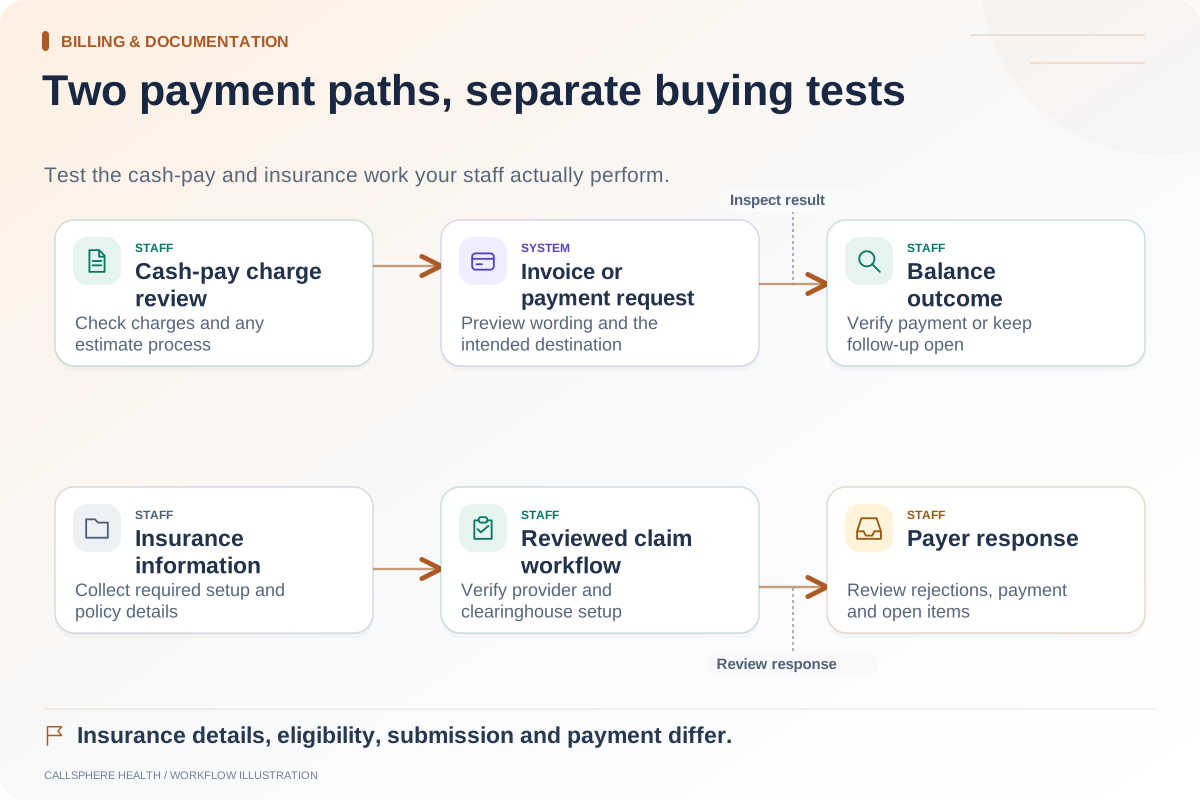
| Billing connection | Claims/checks or service package | Usage/monthly | Current fee schedule |
| Migration | Export, import, mapping, validation | One-time | Written scope and exclusions |
| Training | Paid assistance plus staff time | One-time/ongoing | Training plan and owner |
| Historical access | Old-system or archive access | Monthly/one-time | Exit and retention terms |
For each line, mark the amount quoted, the amount estimated, or “unresolved.” Do not turn a blank cell into zero.
Work through a hypothetical example
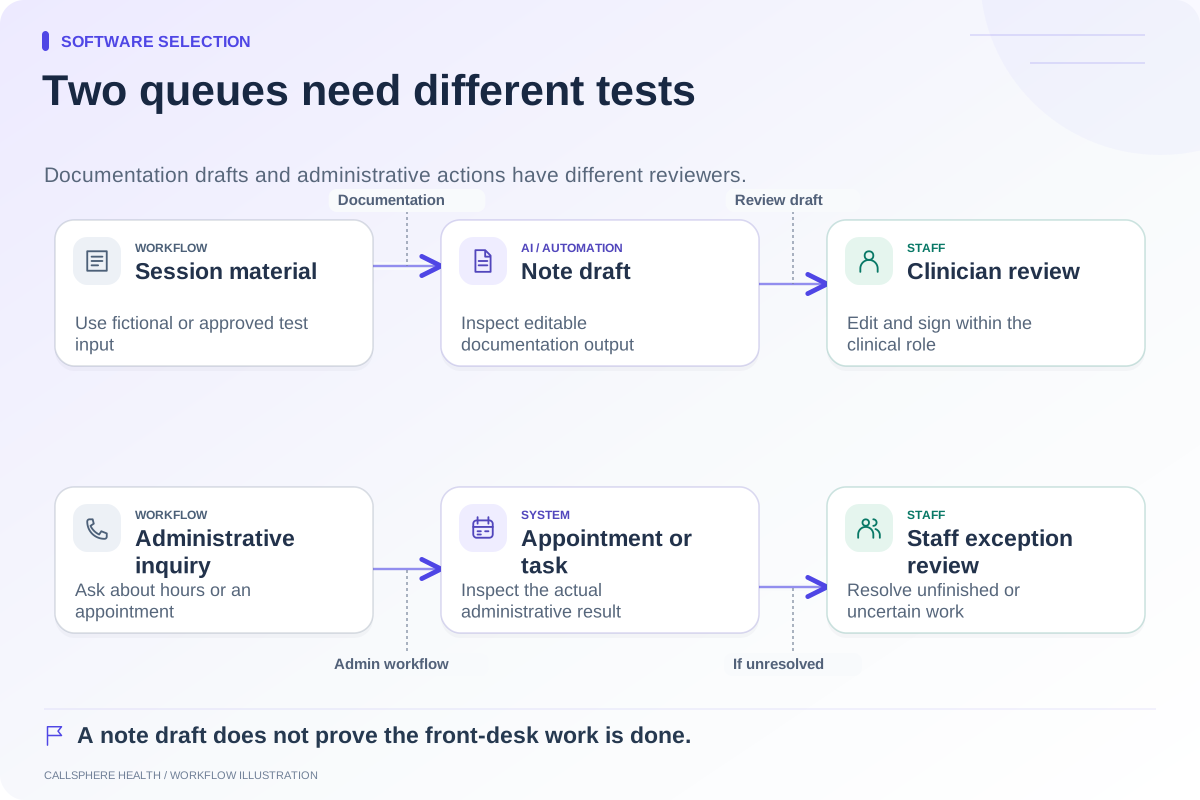
Imagine a practice with four clinicians, one scheduler, and a part-time biller. It wants optional AI for administrative inquiries and note assistance for two clinicians. The owner should request pricing for those exact roles and workflows, not multiply a solo headline price by four.
Suppose a fictional vendor quote contains a $100 base plan, $40 for each of three additional clinicians, a $60 practice-level add-on, and an estimated $30 of usage. The illustrative monthly calculation is $100 + $120 + $60 + $30 = $310. These numbers are invented solely to demonstrate the worksheet; they are not CallSphere or competitor prices.
If the same hypothetical migration costs $900 once, keep that in a transition column. You may calculate a first-year total for planning, but do not describe the one-time cost as a permanent monthly fee. Likewise, measure staff training time separately instead of implying that it appears on a vendor invoice.
Model usage without inventing savings
Use recent practice records to estimate message, call, claim, or eligibility-check volume where those units affect pricing. Record the period, exclusions, and whether the activity is seasonal. If data are unavailable, use clearly labeled low/base/high assumptions and replace them after a pilot.
A claim that software “saves the cost of a receptionist” is not a cost calculation. Staff may still manage exceptions, verify information, and complete unrelated duties. Compare observed task time before and after a controlled rollout, then decide what that capacity means for the practice.
Recheck date-sensitive charges
Vendor pricing can change between research and purchase. SimplePractice's pricing FAQ announces new insurance charges starting October 1, 2026. Jane's U.S. pricing distinguishes plans and add-ons. Obtain a current quote rather than treating this article as a price guarantee.
CallSphere Health publishes separate base and AI add-on options on its pricing page. Confirm the proposed configuration, service usage, and user scope. Its supported AI workflows still involve staff responsibility and connected-service dependencies, explained in the capability overview.
Keep the completed worksheet with your demo results. A slightly higher visible subscription may be preferable to an unclear total or a workflow that requires substantial re-entry. Use the comparison hub to compare fit alongside the numbers.
Browse more guides to software selection.