A cash-pay therapy practice and an insurance-billing practice should not use identical EHR buying tests. Both need dependable scheduling, intake, records, and communication. Their payment workflows create different responsibilities, integrations, and exception queues. Build the demonstration around how money-related work actually moves through your practice, with billing judgments left to qualified staff.
Many practices use both models. In that case, test both paths instead of choosing an average workflow that does neither well. A checkmark for “billing” does not tell you which path is supported or who completes it.
Start with the cash-pay path
For a cash-pay workflow, inspect how the practice communicates charges, records payment-related information, prepares invoices or superbills where appropriate, and manages unresolved balances. Ask what staff review before information is sent and how corrections appear later.
Use a fictional appointment with an unpaid balance in a controlled test environment. Preview the communication and payment-link destination without making a real payment. Check that staff can distinguish a requested link, a sent message, and a completed payment.
If your practice has obligations around estimates for uninsured or self-pay care, assign a qualified person to review the process. CMS provider guidance explains the relevant good-faith-estimate framework. Do not assume an EHR's invoice feature fulfills every estimate requirement. Source reviewed September 9, 2026.
Then follow the insurance path
For an insurance workflow, ask how the product handles information collection, provider setup, eligibility responses, staff-reviewed claims, rejection handling, remittances, and unresolved balances. These are connected tasks but not interchangeable statuses.
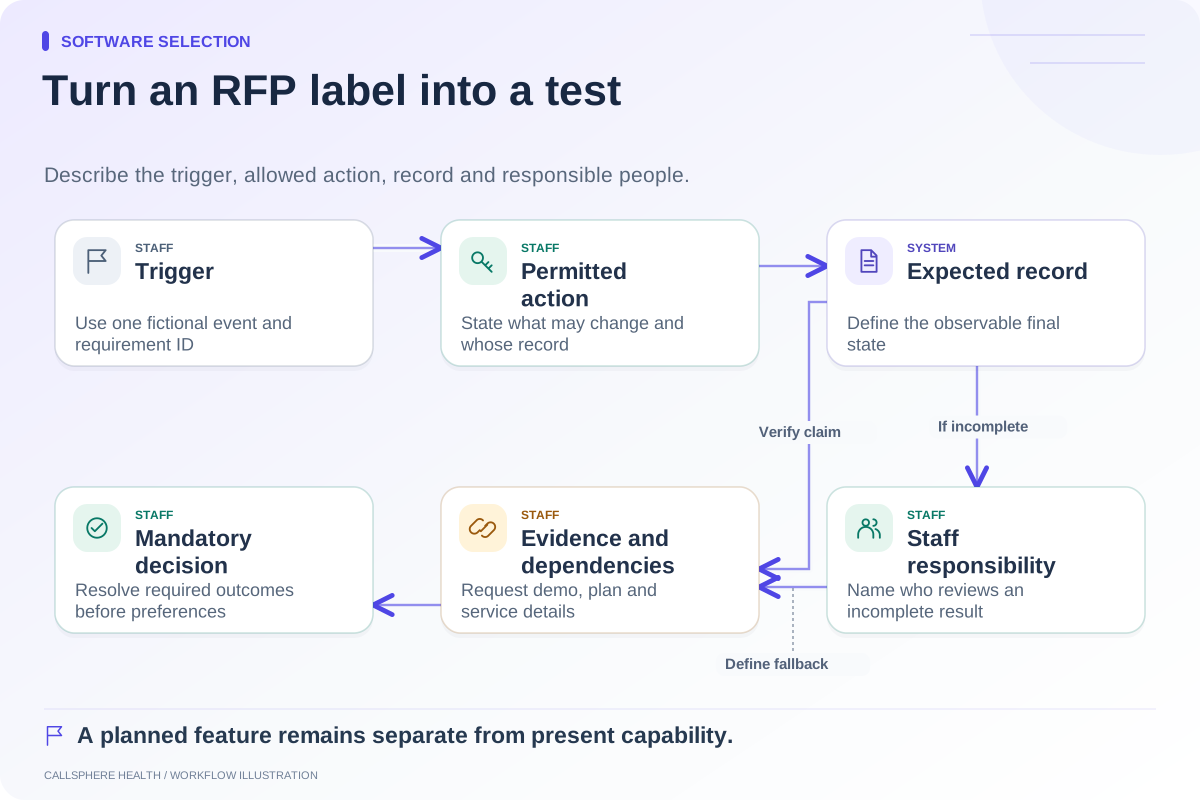
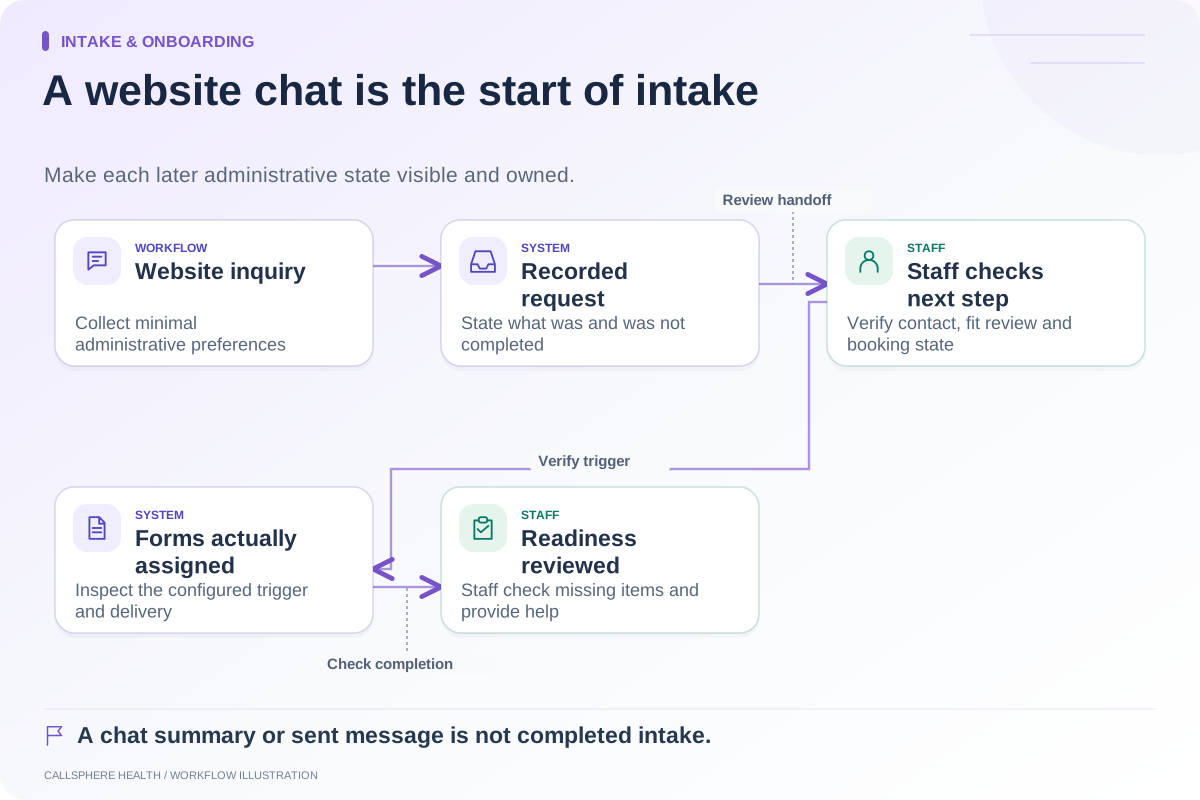
A card image in the record is not proof that benefits were checked. An eligibility response is not a guarantee of payment. A submitted claim is not a paid claim. Your billing lead should identify the evidence needed at each stage and verify the required connection before the practice relies on it.
| Demonstration question | Cash-pay emphasis | Insurance emphasis |
|---|---|---|
| What information is needed before the visit? | Payment/estimate process as applicable | Insurance and provider setup details |
| What requires review? | Charges, communication, corrections | Claim content and payer responses |
| Which external service is involved? | Payment transport if used | Clearinghouse and payer workflows |
| What creates an exception? | Failed delivery, unresolved balance | Rejection, missing information, unresolved response |
| Who closes the task? | Assigned administrative role | Assigned billing role |
Compare two hypothetical buyers
A hypothetical solo counselor accepts private payment and gives clients documents for their own reimbursement requests. The owner may place greater weight on clear invoices, client communication, and manageable administrative steps than on a complex claims workflow.
A hypothetical group practice bills several insurers and has a dedicated biller. It may require deeper demonstration of payer-related setup, claim statuses, and reconciliation. A product that is convenient for the solo practice could leave important group-practice requirements unresolved.
Neither scenario establishes a vendor winner. The purpose is to change the test based on the work, not to label one payment model simpler or more profitable.
Verify CallSphere Health's supported boundaries
CallSphere Health includes staff-reviewed billing and insurance workflows with configured services. Its AI billing assistance can help a verified adult ask about their own balance and request a payment link sent to the contact on file. That does not mean AI adjudicates coverage, resolves disputed charges, or independently manages collections policy.
Claim preparation/submission and pre-visit eligibility workflows depend on the configured clearinghouse connection and required provider information. Staff must review the work and interpret the response. The capability overview describes these limits; a demonstration should use synthetic data with real payer and payment effects disabled.
Add the payment model to the cost worksheet
Usage-based claims or checks, payment fees, staff seats, and optional services can change the total. Request current vendor pricing for your workflow. For example, SimplePractice's pricing FAQ includes date-sensitive insurance charges, so an old comparison may not describe the current purchase.
Have the owner and billing lead sign off on the same evidence log. Use the full-cost worksheet and comparison hub to keep price, workflow fit, and unresolved dependencies together. The right EHR supports your payment process with understandable staff responsibilities.
Browse more guides to software selection.