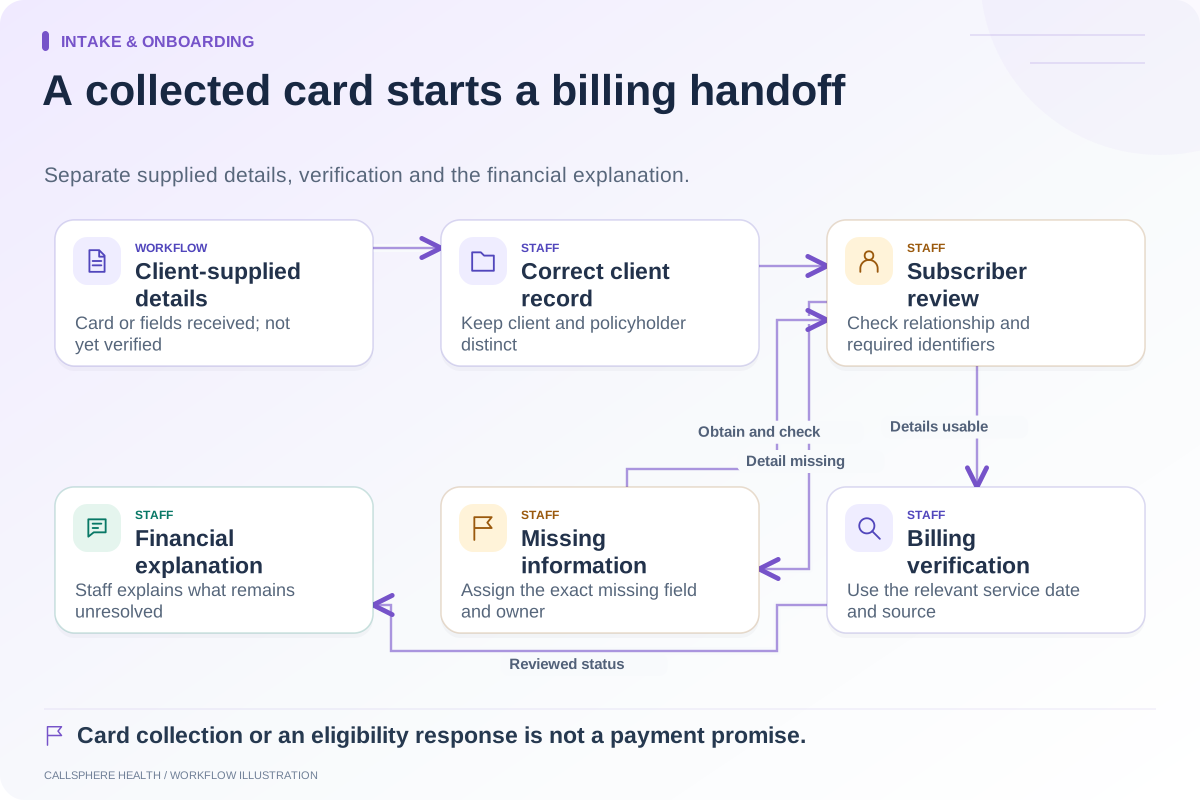
Insurance eligibility, claim status and payment status answer different questions. A coverage response does not prove that a particular claim will be paid, and a recorded payment does not explain every remaining balance. Train staff to identify the source, date and scope of each status before explaining it to a client.
A clear status glossary is useful when evaluating an EHR because vendors may use similar labels for different events. “Verified,” “accepted” and “paid” should have definitions the practice can inspect, not meanings inferred from a green color.
Use a plain-language status glossary
| Status or event | What it can establish | What it does not establish alone |
|---|---|---|
| Insurance details collected | Information is on file | Current eligibility or accurate policy linkage |
| Eligibility response received | An external eligibility result is available for review | Payment approval for every future service |
| Claim prepared | Billing information has been assembled | Transmission to a payer |
| Claim submitted | A submission event occurred in the documented workflow | Acceptance, adjudication or payment |
| Claim accepted | Acceptance at the identified processing stage | Final payment by the payer |
| Payment recorded | A payment event or ledger entry exists | Correct allocation or a fully resolved account |
Use the product’s exact definitions when training staff. These are general distinctions, not a substitute for interpreting a payer response or applying a contract.
Identify which system produced the status
CMS documents eligibility requests and responses separately from claim-status requests and responses. That separation gives a practice a useful question: which transaction or staff action caused this label?
Ask whether “accepted” refers to a local validation check, a clearinghouse acknowledgment or a payer stage. Request the timestamp and reference used to trace it. A stale response should not silently look like a current check.
A hypothetical misleading green badge
An administrator sees an eligibility response marked active and tells a client that the upcoming appointment will be paid in full. The actual response has not been reviewed for the relevant service and circumstances. The software badge was real, but the conclusion exceeded what it established.
A better administrative response identifies the stage: “Our billing team has received information to review. They can explain what is known about your account and what still needs confirmation.” The exact wording should follow the practice’s approved process and should not become personalized financial advice from an unqualified assistant.
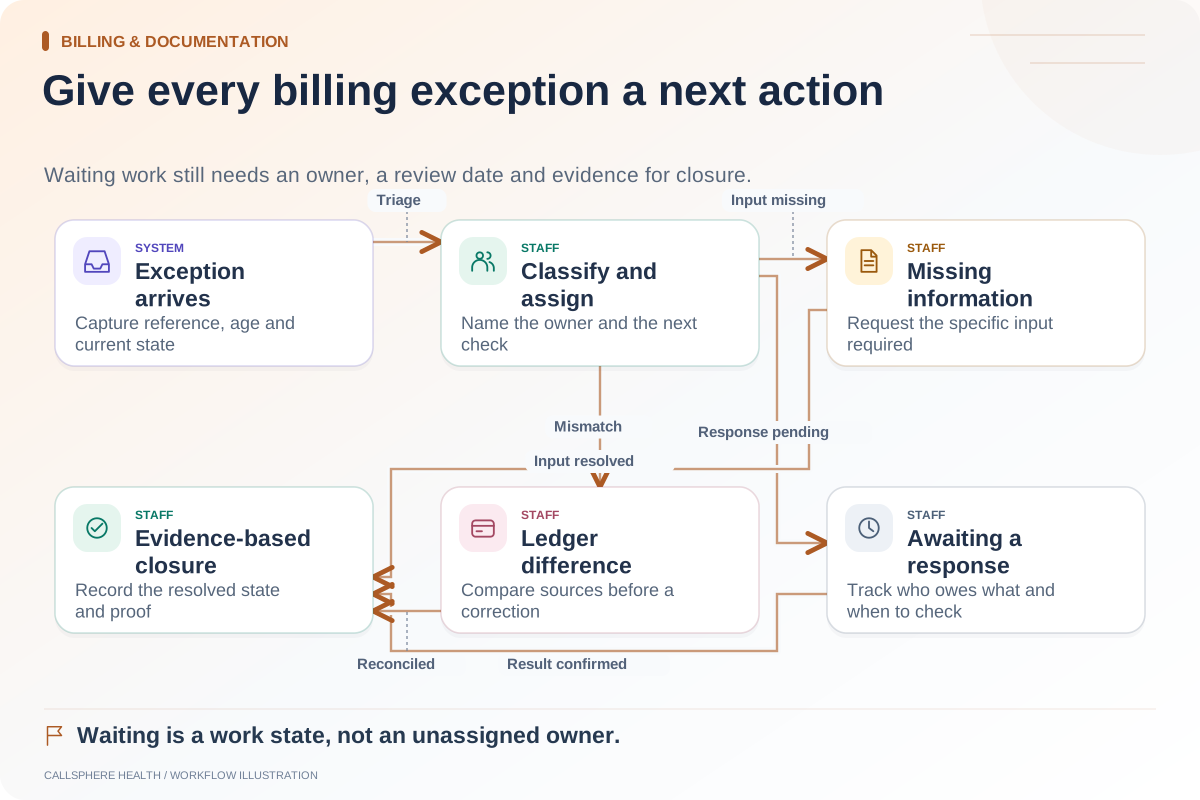
In another hypothetical case, a payment was entered but applied to the wrong invoice. A “payment received” label is accurate at one level while the account still requires reconciliation. The correct next action belongs to the billing owner.
Keep status changes traceable
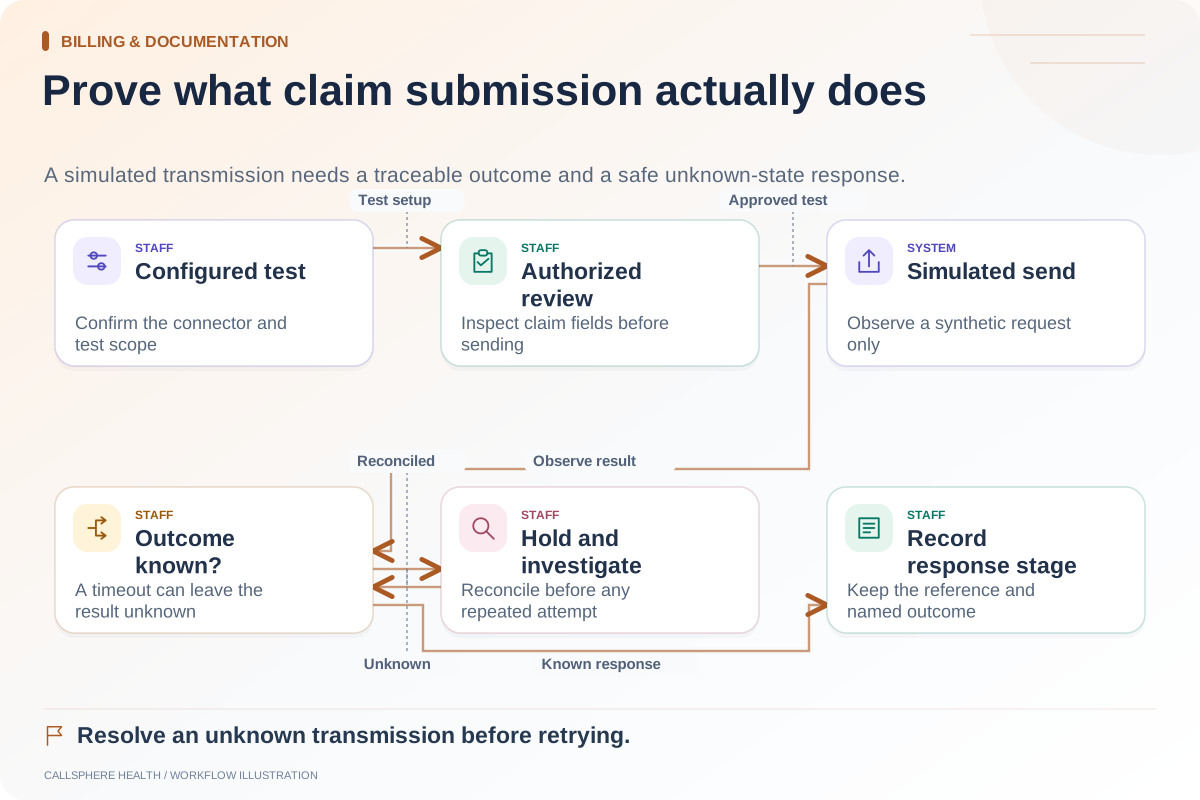
A staff member should be able to follow the sequence without guessing: prepared, transmitted, response received, reviewed and reconciled. The sequence may contain retries or corrected submissions. Preserve those distinctions rather than overwriting history with one final word.
Define which actions update the ledger and which only update information. An imported response should not be assumed to create a correct accounting entry unless the workflow explicitly supports and verifies that behavior.
Build a short explanation rule
Before replying to a client, staff should ask: what is the source, how current is it, what does it prove and who can resolve the remaining question? That rule is more durable than memorizing a color legend.
Avoid allowing public AI to turn an accepted-insurance FAQ into an individual coverage promise. Practice information, verified account access and payer interpretation are separate scopes.
Check the CallSphere boundaries
CallSphere’s platform supports configured insurance and billing workflows. Its capabilities page makes clear that clearinghouse setup and staff review apply. AI balance and payment-link assistance is limited to verified adults and their own records; it does not adjudicate coverage or guarantee payment.
For a demo, request a synthetic eligibility response, an unresolved claim and a recorded payment needing review. Ask the team to explain each status from its underlying event and show the responsible next action.
Continue the workflow
Explore billing & documentation: Hand insurance information from intake to the billing team · What to verify before relying on an EHR's claim submission · Create an owner-based queue for billing exceptions.
Research reviewed September 9, 2026. Organizational authorship: CallSphere Health. Examples are hypothetical; this is operational guidance, not individualized clinical, legal or billing advice.