Choose between an AI receptionist and an answering service by defining the outcome your practice needs: a message, an approved answer, a completed administrative action, or a live human conversation. Evaluate the exact service offered rather than assuming either category includes every function. Both models need clear practice information, privacy-aware handling, and staff ownership for unresolved requests.
An answering service may be a good fit when human conversation and message-taking are the primary needs. An AI receptionist may be worth evaluating when supported administrative actions and consistent routine answers are important. Actual vendor scope, configuration, and performance determine the fit.
Compare actions before personalities
A friendly caller experience matters, but it is only one part of the workflow. Ask what happens after the greeting and whether the result appears where staff work.
| Evaluation dimension | Questions for either model |
|---|---|
| Routine information | Who supplies and updates the approved answers? |
| Appointment work | Can the service request, create, or change appointments? |
| Identity boundaries | What happens before existing account details are discussed? |
| Staff escalation | Is it a message, task, callback route, or live transfer? |
| Coverage | Which hours and contingencies are actually included? |
| Review | How can the practice inspect mistakes and unresolved work? |
| Cost | Which minutes, calls, seats, or actions affect the bill? |
Do not assume an answering service cannot schedule or that every AI product can. Ask the selected vendor to demonstrate its supported connection and operating rules.
Match the service to the request mix
Review a small, authorized sample of administrative call categories from your practice without exposing patient details to prospective vendors. Separate routine office questions, new inquiries, appointment changes, billing questions, and requests outside the front desk's scope.
If the practice mainly needs staff to receive accurate messages, a well-run message-taking process may meet the requirement. If repeated calendar re-entry is the problem, investigate an action-capable workflow. If callers need a human conversation at that point in the process, preserve an appropriate staffed route.
Avoid converting call-category counts into an assumed savings percentage. A service may change when work happens or improve context while leaving significant staff responsibilities in place.
Work through a hypothetical purchase
Lakeside Example Counseling has an administrator who is unavailable during a daily meeting. The owner wants callers to receive basic information and leave a clear callback request. A limited service with accurate capture and reliable queue ownership may be sufficient.
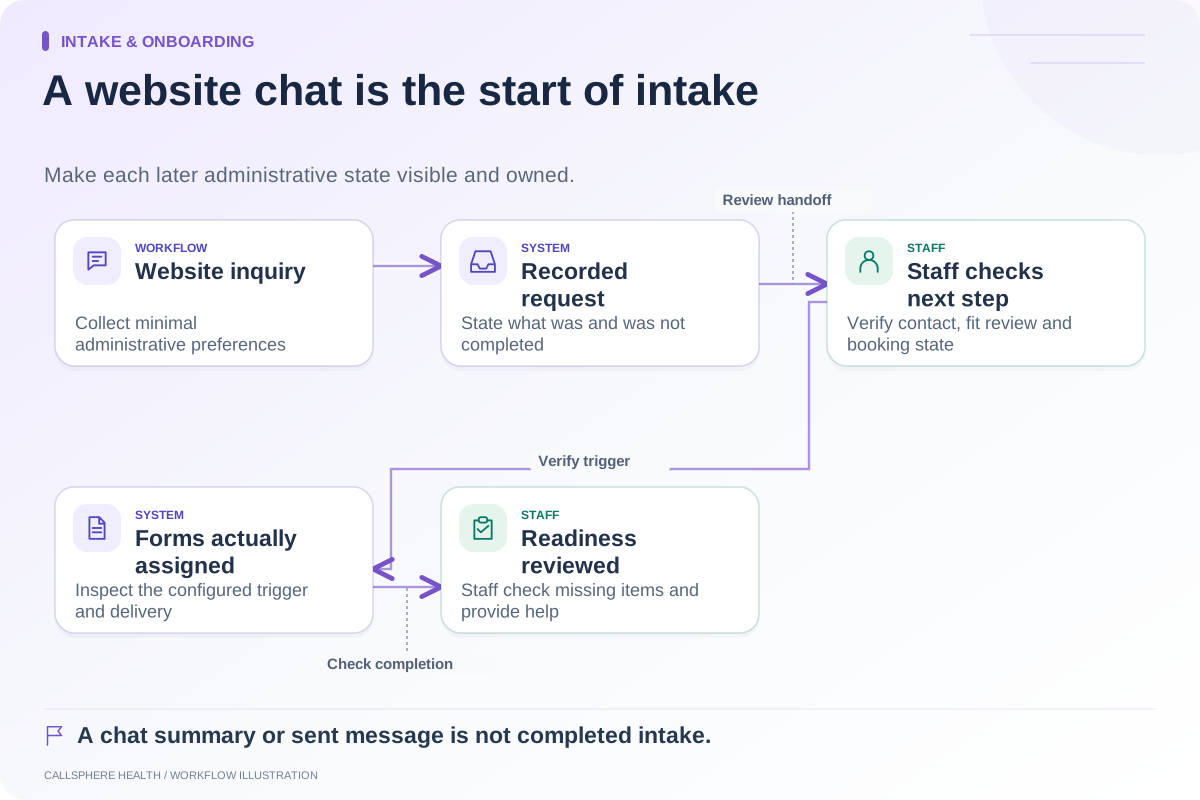
A second hypothetical practice wants eligible routine appointment changes completed without staff re-entry. Its evaluation must go deeper: identity checks, availability, calendar writes, notifications, and failed-action handling. A vendor that only takes messages would not meet that particular requirement, whether it uses people or AI.
The two practices can reasonably buy different services. Neither example describes a measured result or a universal recommendation.
Specify the handoff in the agreement and demo
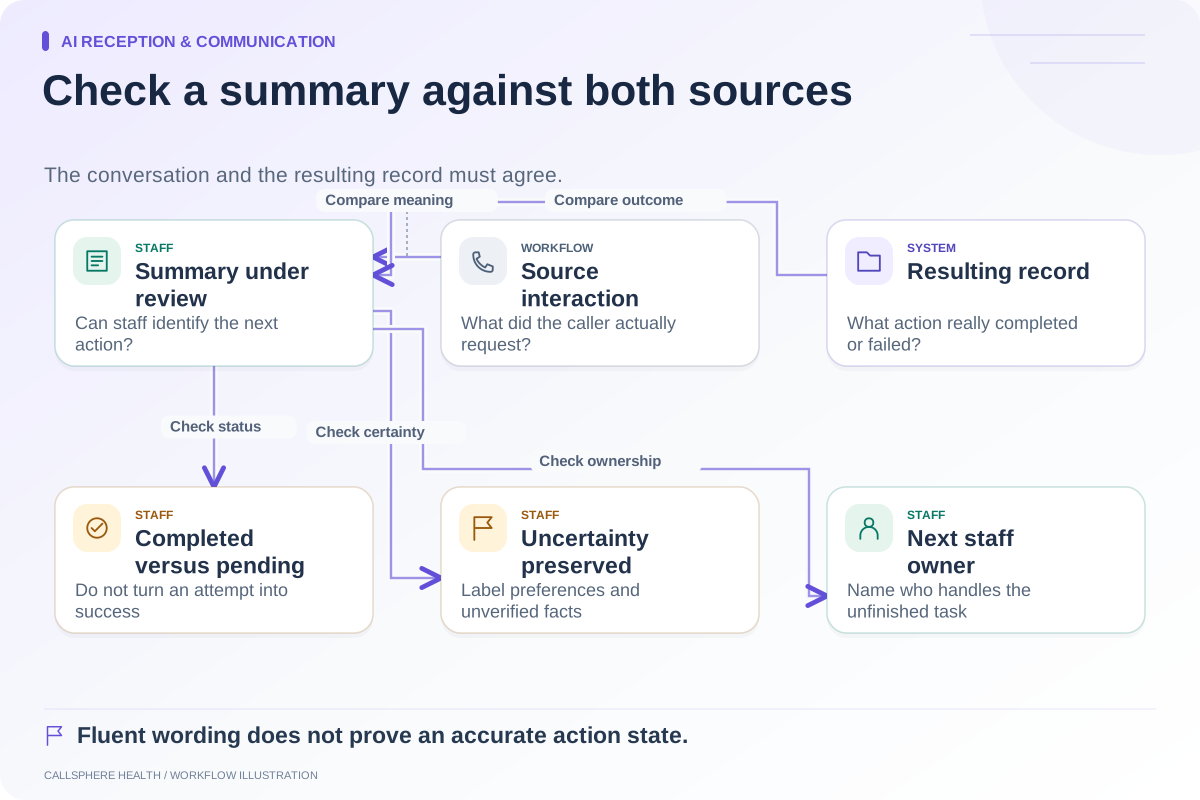
Ask what “transfer” means and when a person is available. If the service records a message, the caller should hear that a callback is pending. If a live transfer is offered, test its actual behavior and fallback using controlled numbers.
CallSphere Health currently supports configured callback/handoff requests and staff contact routes; its product evidence does not establish a live warm telephone transfer. Its optional AI front desk also supports routine knowledge answers and configured appointment actions. Review the capability limits before treating those as a complete substitute for your existing service.
Review information handling for both options
A human service is not automatically appropriate for every information flow, and an AI label is not a security assurance. Ask which systems and people receive the information, which agreements apply, and how access is controlled. HHS's business-associate guidance can inform review by qualified privacy or legal staff. Source checked September 9, 2026.
Keep clinical advice, diagnosis, therapy, and clinical triage outside an administrative AI role. Have the practice define its appropriate contact guidance and escalation procedures rather than relying on broad vendor language.
Pilot the smallest useful scope
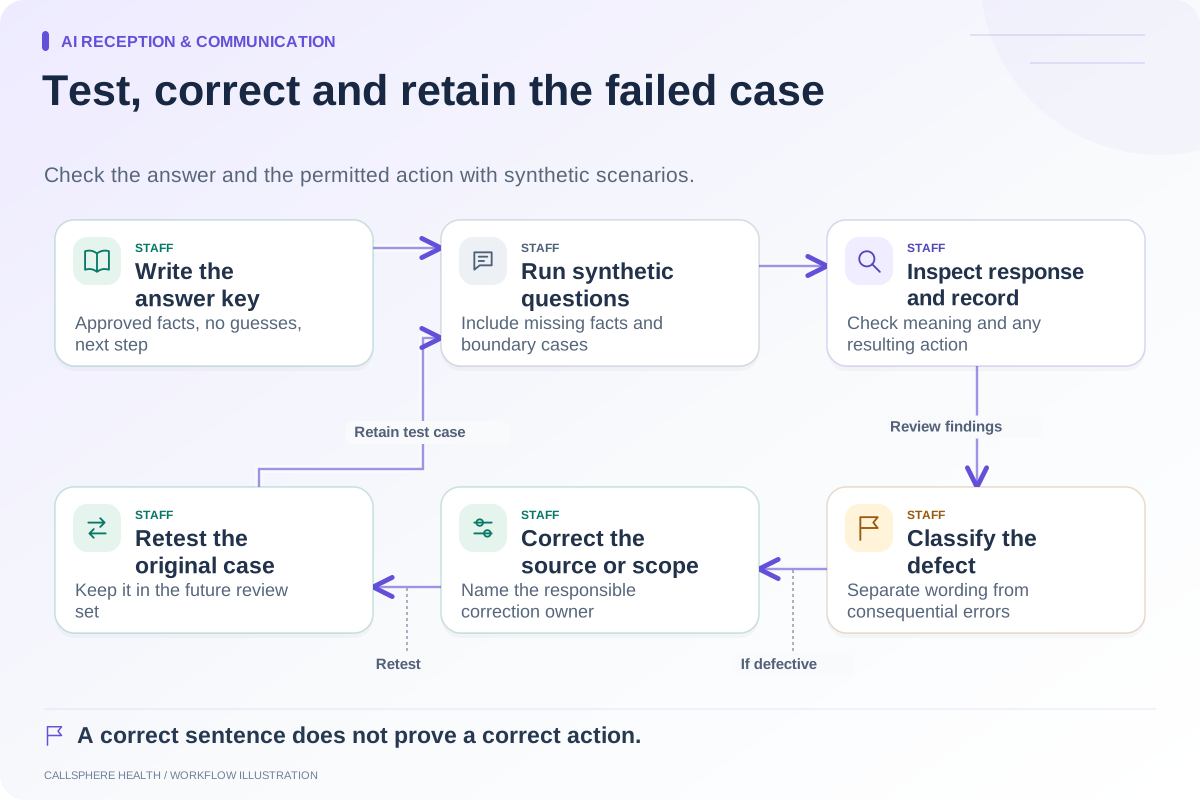
Test routine answers, one supported action, and one unresolved request. Inspect outcomes with the staff who will own follow-up. Compare their actual work and the caller-facing status, then decide whether to expand.
Use the receptionist demo questions and AI receptionist overview to prepare a focused evaluation. The most useful service is the one whose demonstrated scope matches your practice's needs and staffing.
Browse more guides to AI reception and communication.