Compare SimplePractice, Jane, and TherapyNotes by the complete tasks your practice needs to perform: receiving an inquiry, arranging a visit, collecting intake, communicating with clients, and preparing reviewed documentation and billing work. All three publish more than record-storage features, and all three offer AI documentation options. Their differences are meaningful only in relation to your plan, practice structure, and workflow.
This is a source-based purchasing framework for U.S. mental and behavioral health practices, checked September 9, 2026. It is not a hands-on ranking of competitor accounts. Public documentation supports the feature descriptions; the evaluation questions are our original operational analysis.
Start with the documented building blocks
| Product | Documented examples | Important follow-up |
|---|---|---|
| SimplePractice | Appointment requests, intake, telehealth, billing, optional Note Taker | Check team, communication, and external-widget plan requirements |
| Jane | Online booking, intake, charting, payments, optional AI Scribe | Check U.S. plan details and advanced scheduling requirements |
| TherapyNotes | Therapy scheduling, documentation, reminders, billing, optional TherapyFuel | Demonstrate staff roles and the specific documentation/billing handoff |
Sources: SimplePractice features by plan, Jane U.S. plans, and TherapyNotes subscription options.
The table deliberately avoids a count of checkmarks. “Scheduling” might mean an appointment request, direct booking, or a staff-managed calendar action. “AI” might refer to a note draft rather than an administrative conversation.
Decide whether requests should require approval
A practice that reviews every new client before confirming an intake appointment may prefer a clear request queue. A practice with tightly defined bookable services may prefer a direct booking flow. Neither is inherently superior.
SimplePractice's external widget documentation describes requests that staff can accept or decline. For any platform, ask what the prospective client sees before approval and when the calendar becomes committed. Then ask what happens if the requested time disappears.
Use the same fictional request in each demonstration. Verify service length, provider, location or modality, and time zone. These details reveal more than a screen showing that a calendar exists.
Examine cancellation recovery separately
Jane's official waitlist setup guide describes optional automatic notifications on specified plans and identifies limits for group/class waitlists. A notification is an offer that the client must act on.
For every candidate, inspect the opening, the offer, the client's acceptance, and the final booking. If staff must prioritize who receives the offer, show that step too. A practice running groups should not assume that an individual-appointment workflow covers capacity and participant communication.
Compare AI by input, output, and reviewer
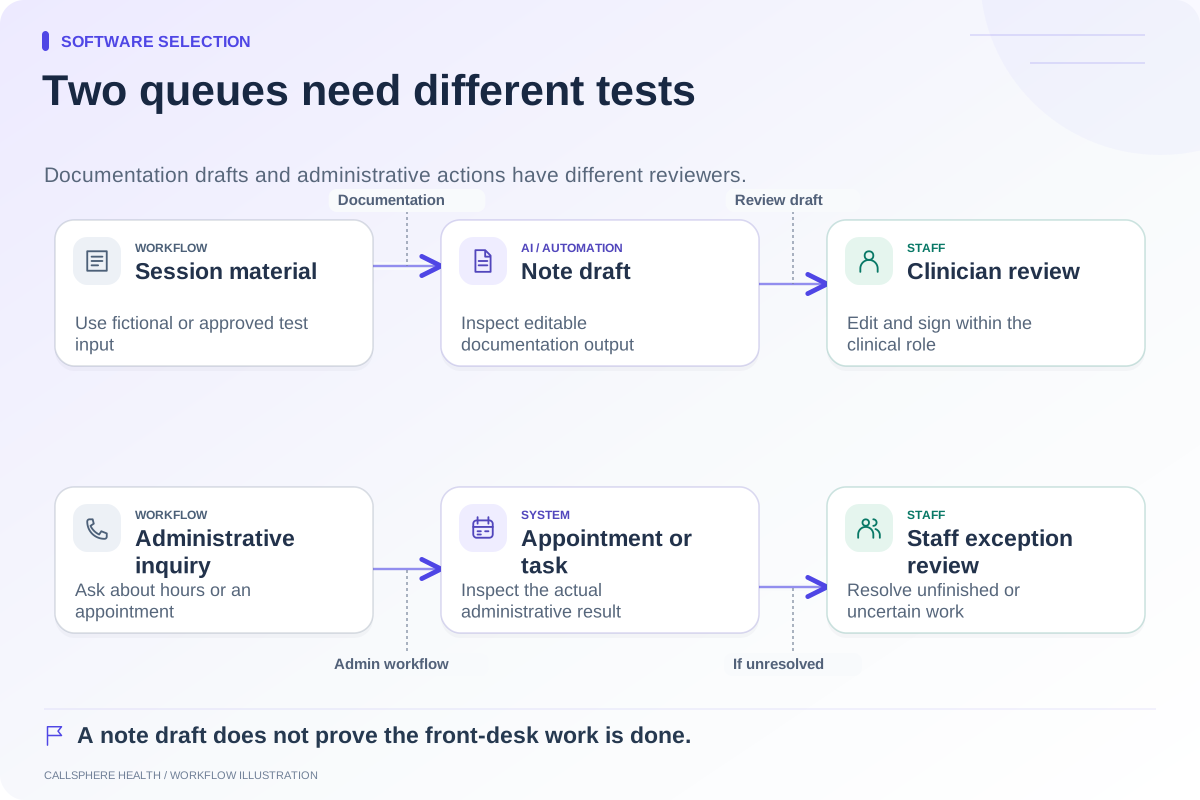
Ask what information an AI tool uses and what it produces. A clinician-reviewed note draft is different from a contact summary, an appointment update, or a callback request. Record the responsible reviewer for each output.
The vendors' official sources describe optional documentation AI, including Jane AI Scribe and TherapyFuel. Do not infer that a product lacks administrative AI because a particular source focuses on notes. Leave unsupported comparison items unverified and request current evidence.
Build two hypothetical shortlists
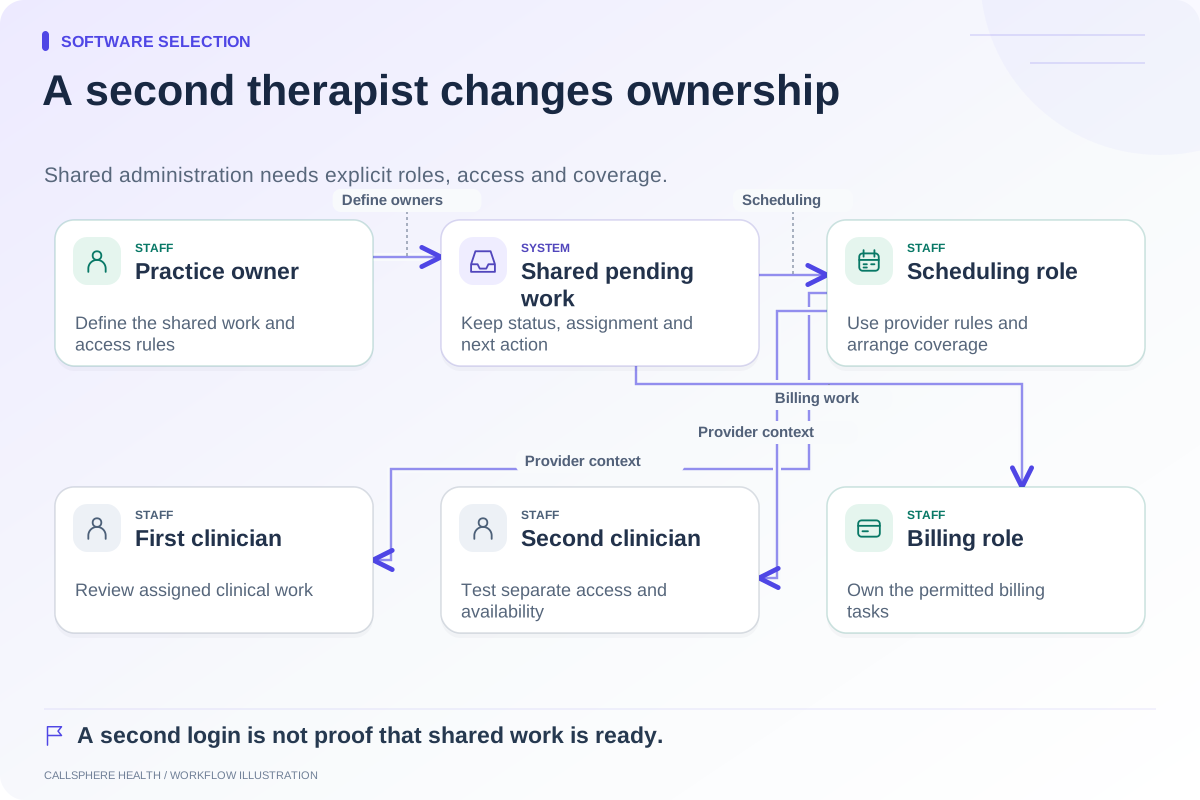
A solo counselor with a stable caseload might prioritize straightforward intake, reviewed notes, payment administration, and predictable costs. A multidisciplinary group might place greater weight on resource scheduling, distinct staff roles, and consistent workflows across clinicians. They could reasonably choose different products from the same table.
CallSphere Health belongs in an evaluation where an owner wants an EHR alongside AI front-desk workflows for routine phone and website inquiries. Configured booking actions and callback requests are supported; complete clinician matching, warm transfer, and seamless intake completion should not be assumed. Review the capability boundaries and test the exact sequence.
Request a current quote after testing fit
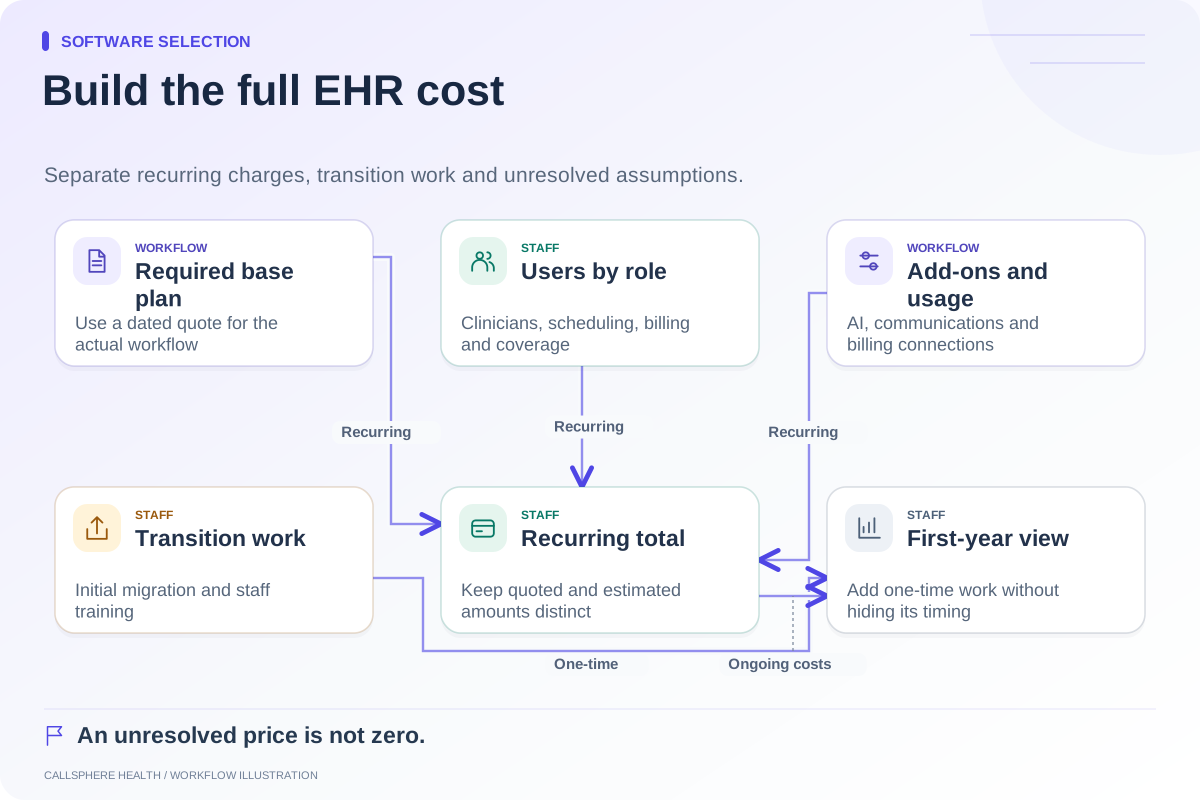
Include users, optional AI, communication usage, billing services, migration work, and support expectations. Pricing is date-sensitive: SimplePractice's pricing FAQ announces insurance-charge changes beginning October 1, 2026. Recheck sources when purchasing.
Use the full-cost worksheet and comparison hub to document your decision. The goal is an explainable choice with known responsibilities, not a universal winner.
Browse more guides to software selection.