Before signing an EHR contract, ask for written answers about the service you are buying, the data you can retrieve, the cost of leaving, and who handles failures or transitions. Match those answers to the workflows demonstrated in your evaluation. A contract review should turn assumptions into clear responsibilities, with legal and security questions reviewed by the appropriate professionals.
For a practice owner, this is an operational preparation exercise. It helps you identify the evidence to request; it is not a substitute for advice on the meaning or enforceability of a particular agreement.
Define the purchased service precisely
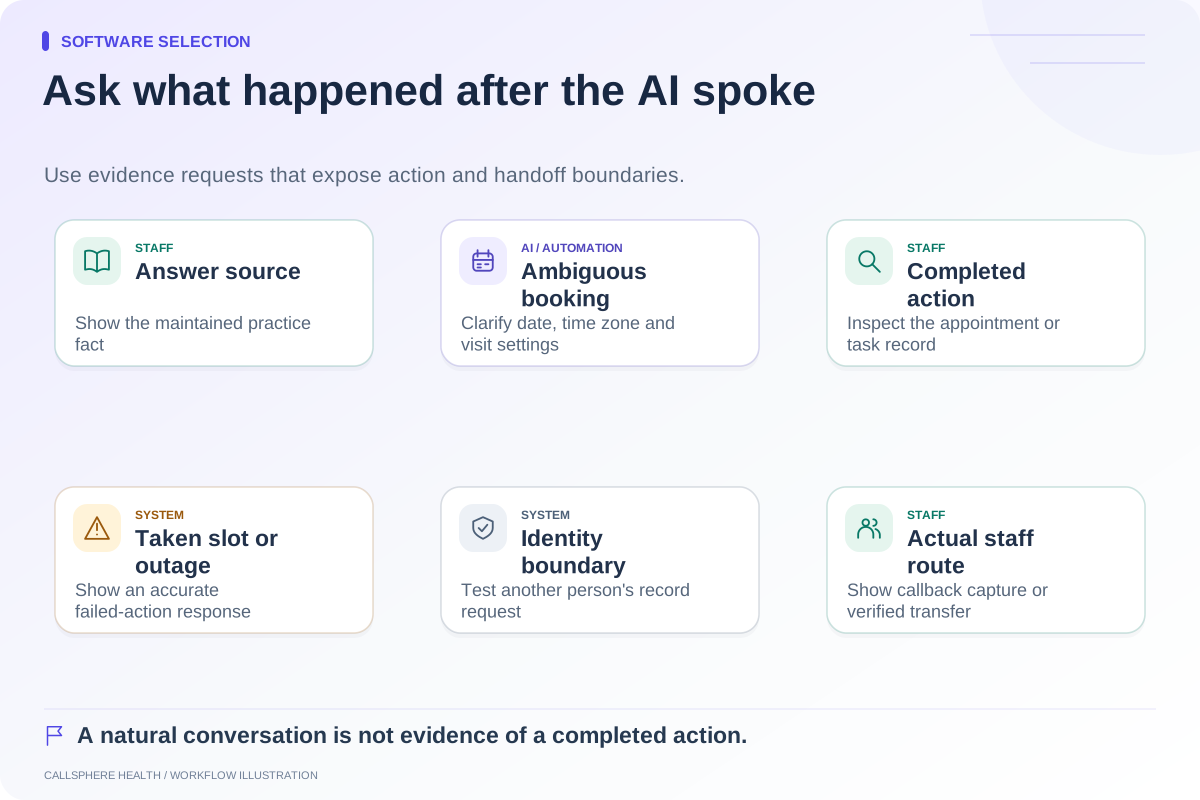
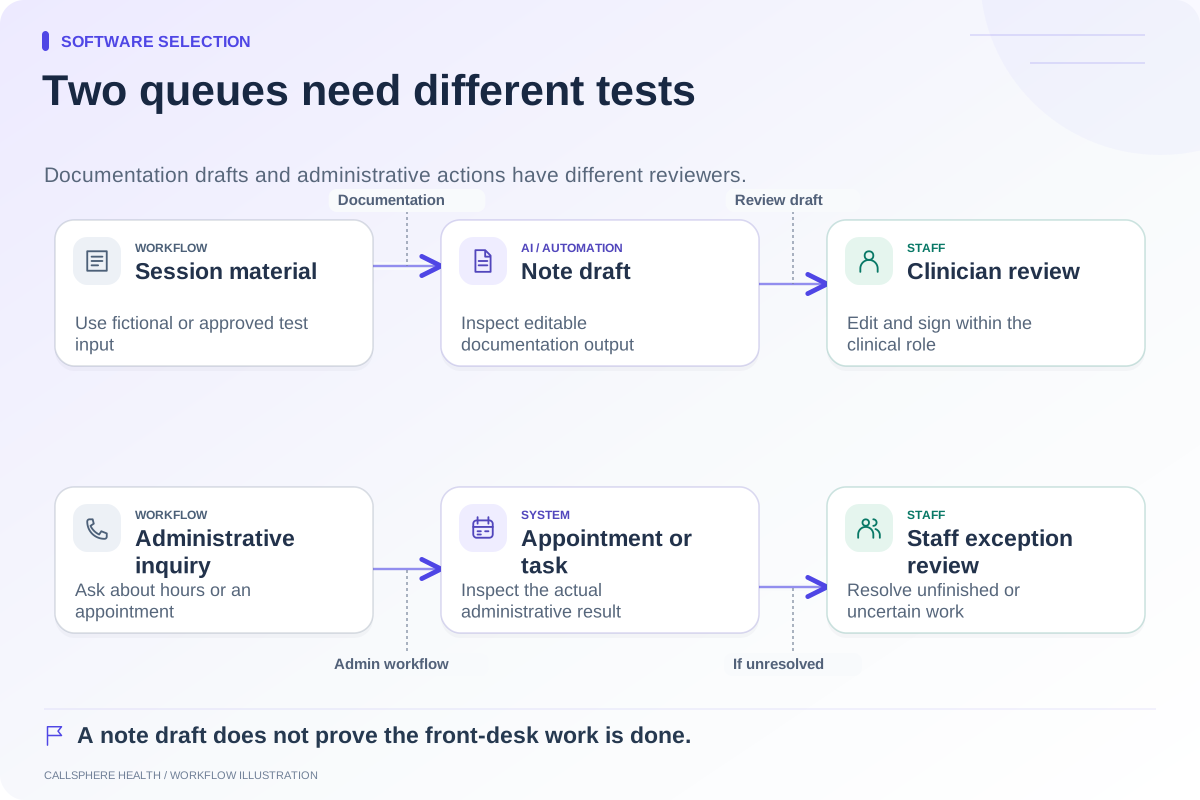
List the plan, users, AI tools, integrations, support services, and usage limits included in the proposal. Ask which functions depend on another provider, separate credentials, or an additional agreement. A statement such as “AI scheduling included” should be connected to specific supported appointment actions and configuration responsibilities.
Write down any promised future feature separately. If your practice cannot operate without it, do not treat a roadmap discussion as present availability. Ask for the current supported workflow and an acceptable fallback.
| Question | Evidence to request | Practice owner |
|---|---|---|
| What exact service are we purchasing? | Dated order form and scope | Business owner |
| How are usage and extra users charged? | Fee schedule and examples | Administrator |
| What data can we export? | Sample formats and exclusions | Migration lead |
| What happens at cancellation? | Access end date and transition terms | Owner and legal reviewer |
| Who handles a service failure? | Support and escalation terms | Operations lead |
| How is practice information processed? | Data-flow and contractual documents | Privacy/security reviewer |
The owner column identifies who gathers and checks information, not who can independently approve every legal term.
Ask for the exit artifact before entry
Request a sample export using fictional data. Identify which information is structured, which becomes a document, and which may not be included. Ask about appointments, contact relationships, form responses, signed documents, billing information, and historical access as applicable to your practice.
Set expectations about delivery timing, fees, assistance, and who validates the result. A statement that “you own your data” does not by itself explain how you will receive a usable copy. The ASTP/ONC EHR playbook provides selection and migration resources to help frame those questions. Sources reviewed September 9, 2026.
Clarify what continues after notice
A hypothetical practice plans to switch systems at the end of a quarter. It needs two weeks to reconcile exports and verify historical documents. If account cancellation immediately ends access, the practice could lose the ability to compare records during that period.
The operational question is therefore specific: what access remains between cancellation notice, final service date, export delivery, and transition completion? Ask about read-only arrangements, outstanding charges, ongoing communication workflows, and any functions that stop immediately. Have qualified reviewers evaluate the written terms before relying on them.
Separate availability promises from recovery duties
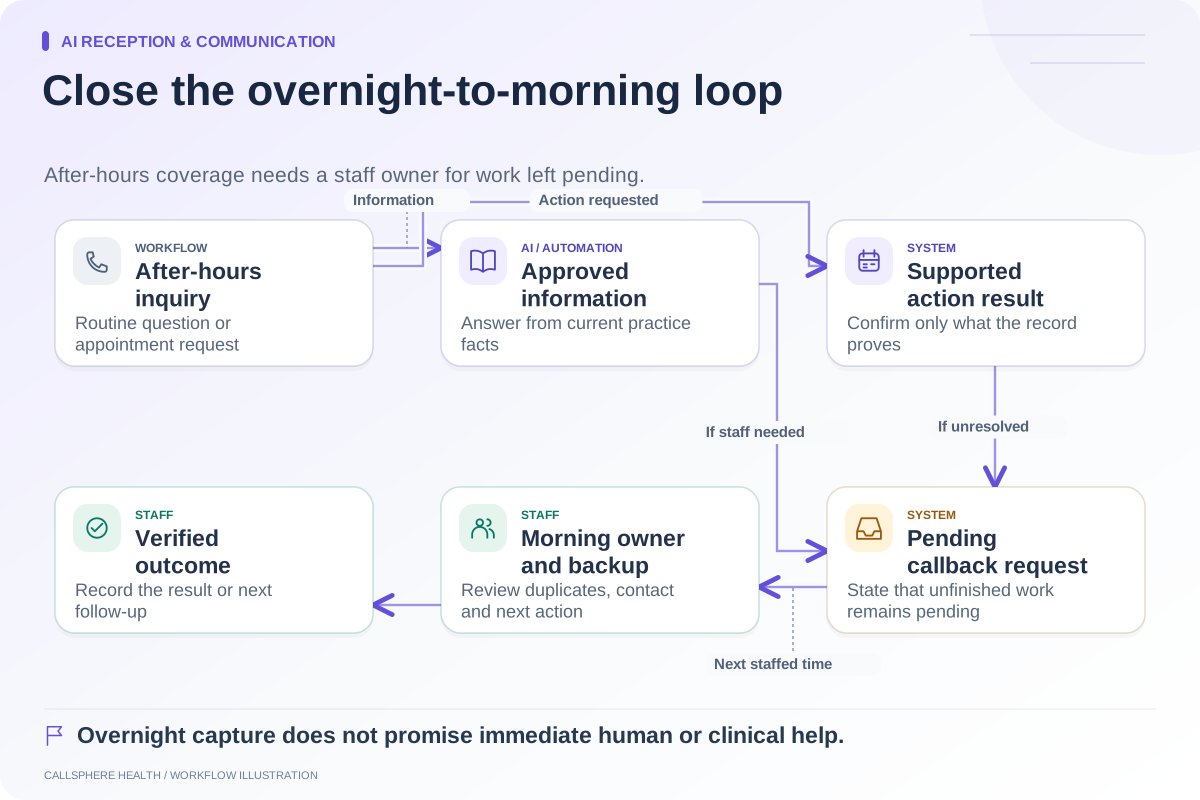
Ask how incidents are reported, how your practice contacts support, and what the vendor expects staff to do during an outage. Clarify whether an integration failure is handled by the EHR vendor, the connected provider, or your team. A general uptime statement may not describe a particular phone, messaging, or clearinghouse connection.
For a booking workflow, ask how incomplete actions become visible. For data recovery, ask what evidence describes backup and restoration responsibilities. Request the actual terms; do not infer a guarantee from a technical diagram or security badge.
Review data handling with the right expertise
HHS explains that relevant cloud providers handling electronic protected health information may be business associates and that applicable agreements and risk analysis matter. See HHS cloud-computing guidance. That guidance does not certify a vendor or mean that signing one document settles every obligation.
For optional AI, ask which services process information, what is retained, and how permitted uses are documented. Keep factual claims about CallSphere Health tied to its capability overview and the current documents supplied for your review. Do not infer audited compliance or a live workflow guarantee from implementation alone.
Take the completed question table into the final purchasing discussion. The full-cost worksheet helps connect contract scope to the budget, while the comparison hub keeps the decision focused on demonstrated operational fit.
Browse more guides to software selection.