Signing the lease on your second office feels like the milestone. It is not. The lease is the easy part, because a commercial broker, a build-out budget, and a state facility application are all knowable quantities you can put on a spreadsheet. The thing that actually decides whether site #2 becomes a second engine or a second drain is far less photogenic: the administrative plumbing that has to answer two lobbies, book across two calendars, and verify insurance for two intake queues without your front desk quietly falling apart. So the real question is not where the second office goes. It is what administrative infrastructure before second location you need standing up and proven, because expansion does not add capacity to a broken front office, it multiplies the breakage.
Behavioral health makes this sharper than most specialties. Your intake is longer and more sensitive than a dermatology check-in. Your no-show rate is structurally higher, so waitlist and reminder machinery matters more. And a large share of your first contacts are people in a fragile moment who will not call back if the phone rings out. The systems that were merely inconvenient at one office become the difference between two thriving locations and one location plus an expensive echo.
The Front Office That Runs on One Person's Memory
Walk into most single-site therapy practices and the entire administrative operation is load-bearing on one or two people who simply know the routine. They know which insurers need a prior auth for the intake session. They know that the Tuesday-evening slots fill from the waitlist first. They know that new clients get a warm-transfer to the clinical director before the first appointment. None of it is written down, because it never had to be. One office, one counter, one brain.
That works right up until you split it across two buildings. Now that same knowledge has to be in two places at once, and it cannot be. The moment you staff the new office with a front desk who does not carry the same memory, you get drift: different intake questions, inconsistent verification, appointments booked under rules that do not match. Worse, when your original front-desk person takes a vacation day, both locations lose the routine simultaneously, because you never externalized it into a system.
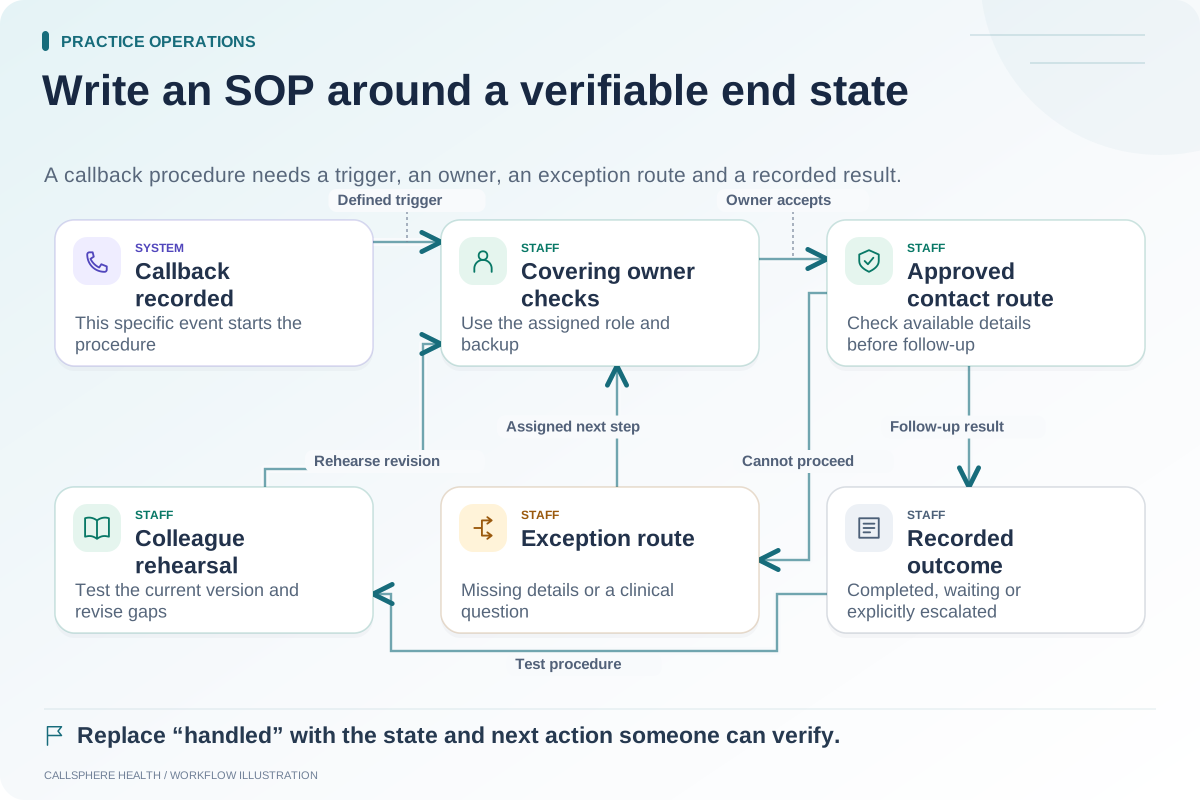
This is why the honest first step of expansion is not construction, it is documentation and centralization. Every intake question, every insurance rule, every scheduling convention has to move out of a person's head and into a shared process before a second building exists to strain it. If you cannot describe your intake and booking flow as a repeatable sequence today, opening site #2 does not double your throughput. It doubles your single point of failure.
Why Phones Are the First System to Buckle
Of everything that strains, the phone line breaks first, and it breaks hardest in behavioral health. Think about who is calling. A parent trying to get their teenager an urgent appointment. Someone who finally worked up the nerve to seek therapy and will not do it twice if they hit voicemail. A current client in crisis. These are not callers who leave a message and wait patiently. Healthcare voicemail abandonment runs north of 70 percent, and for behavioral health first contacts it is almost certainly worse, because the emotional cost of calling is higher and the will to redial is lower.
Now put two offices behind one phone situation. Whether you point both to a single front desk or staff each office separately, the arithmetic is unforgiving. A single behavioral health office already fields 40 to 70 inbound calls a day, clustered in the morning and post-lunch windows. Two offices push that toward 80 to 140, and one receptionist cannot answer two buildings' worth of ringing lines during the same rush. So calls roll to voicemail, and in this specialty a missed call is not a delayed booking, it is a person who does not get care and a new-client acquisition you paid marketing dollars to generate, gone.
flowchart TD
A[New client calls] --> B{Front desk free}
B -- No both offices busy --> C[Rolls to voicemail]
C --> D[Caller hangs up]
D --> E[Client seeks care elsewhere]
B -- Yes --> F[Call answered]
F --> G[Intake and booking]
E --> H[Lost acquisition<br/>marketing spend wasted]
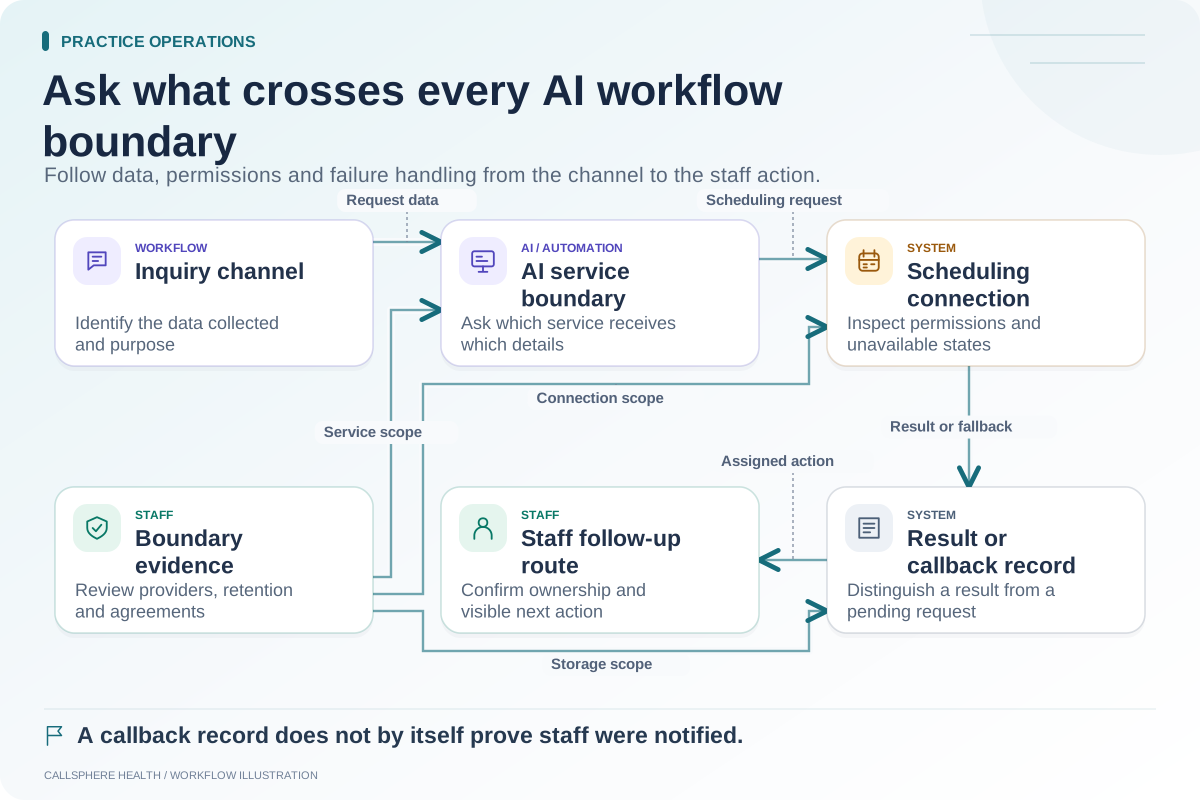
G --> I[Filled schedule<br/>at either site]An AI front desk changes the shape of this problem instead of just adding a body to it. It answers 100 percent of calls for both locations on the first ring, 24/7, so the overflow that used to die in voicemail is instead greeted, triaged, and booked. It handles the routine volume, hours, directions, rescheduling, insurance-accepted questions, and books directly, while handing anything clinical or delicate to your staff with full context. One intake surface, two buildings, no second front-desk team required to keep the lines from ringing out. You can see how that front-office layer is structured on the /features page.
Cross-Site Scheduling Is the System That Actually Decides This
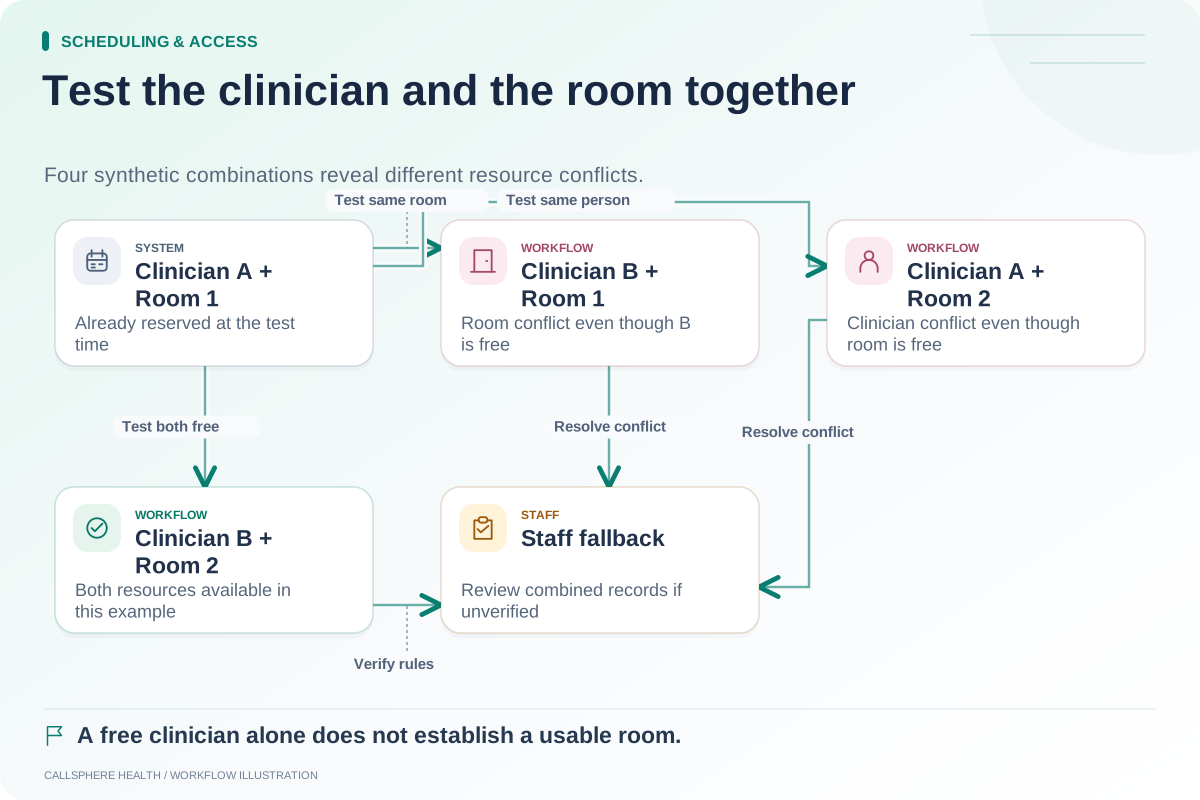
If phones are what breaks first, cross-site scheduling is what determines whether the second office ever pays for itself. Here is the failure mode nobody sees coming. A prospective client calls wanting the soonest available therapist. The person answering works at the original office, sees the original office's calendar, and books them there, three weeks out, because that is the calendar in front of them. Meanwhile the new location has a therapist with open Thursdays sitting empty. You built a second office to add capacity and then systematically starved it, because your booking could not see across the street.
A shared, real-availability calendar spanning both sites fixes this at the root. Whoever answers, human or AI, sees every open slot at every location and books the client into the nearest or soonest opening on purpose. That single capability is what turns two offices into one flexible network instead of two disconnected queues competing for the same callers.
Self-filling scheduling matters even more in behavioral health because your no-show rate is structurally high, often 15 to 25 percent. Every cancellation is a slot that has to be refilled fast or it evaporates, and with two locations you now have two streams of cancellations. A waitlist that auto-refills an opening the moment it appears, drawing from a pool that spans both offices, and multi-channel reminders that cut the no-shows in the first place, are what keep both calendars dense enough to justify the second lease. Manual waitlist management does not scale to two sites, it just becomes two under-managed lists.
flowchart LR
A[Cancellation at site 2] --> B[Slot opens]
B --> C{Shared waitlist<br/>across both sites}
C --> D[Auto match next client]
D --> E[Multi channel reminder sent]
E --> F[Slot refilled same day]
C --> G[Both calendars stay dense]The Intake and Verification Flow Has to Be Proven Before Opening Day
Behavioral health intake is not a two-field form. It is history, presenting concern, consent, and insurance verification that often includes a behavioral-health carve-out with its own authorization rules. When that flow lives in one experienced person's habits, a second office staffed by someone new produces inconsistent intakes and verification misses that surface later as denied claims, exactly when your cash flow is already stretched thin by a second rent payment.
The discipline here is to standardize and test the intake flow at your existing office before the new one opens. Run the documented version, the one that does not depend on memory, for a full month at site #1. If it holds up under your current volume with a proven checklist, you have something you can hand to a new front desk and trust. If it wobbles at one office, it will shatter at two.
Verification deserves its own attention because it is where behavioral health revenue leaks quietly. A carve-out plan verified against the medical side instead of the behavioral vendor produces a clean-looking intake and a denied claim four weeks later. Automating the verification and letting the intake capture the right details up front means the second office starts life with claims that actually pay, rather than a backlog of denials arriving in month two when you can least afford them. Hands-off billing that carries denial follow-up turns those inevitable edge cases into resolved claims instead of write-offs.
Sequencing the Build So the Systems Exist Before the Walls
Put the pieces in order and the pattern is clear: the administrative infrastructure has to exist and be proven before the second office opens, not scrambled together in the chaotic first weeks after it does. The build order looks like this. First, document and centralize intake and verification so the process does not depend on one person. Second, move phones onto a front end that can answer both locations without a second full front-desk team. Third, unify scheduling into one cross-site calendar with self-filling waitlist and reminders. Only then does the physical build-out become the low-risk step it should be.
The financial logic reinforces the sequence. A second front-desk team runs roughly $42,000 to $55,000 a year fully loaded, and in behavioral health you often need more than one person per office to cover the phone-plus-lobby collision. Centralizing the front office with an AI layer means the second building adds clinical capacity without adding a parallel administrative payroll, which is precisely the leverage that makes the second location profitable in year one instead of year three. The cost of that layer against a second salary is easy to compare on the /pricing page, and it is the comparison that reframes expansion from a doubling of overhead to a multiplication of capacity.
There is a multilingual dimension worth naming, too. Many behavioral health practices expand into a second neighborhood precisely because demand there looks different, sometimes a different primary language among prospective clients. A front office that handles voice and text in multiple languages means the second location can serve its actual community from day one, rather than waiting to hire bilingual staff before it can answer the phone in the language its callers speak.
What To Have Standing Before You Sign
The lease is a decision you can reverse in eighteen months. The administrative foundation is not, because once two offices are running on mismatched systems, untangling them is far harder than building them right the first time. So before you sign, have three things not just planned but working at your current office: a phone front end that answers every call and books without dropping to voicemail, a single cross-site calendar with a waitlist that refills itself, and a documented intake and verification flow that a new hire could run on day one. Prove them at one location under real load. If they hold, the second office is a growth move. If they do not, the second office is just a second place for the same problems to happen, at twice the rent.