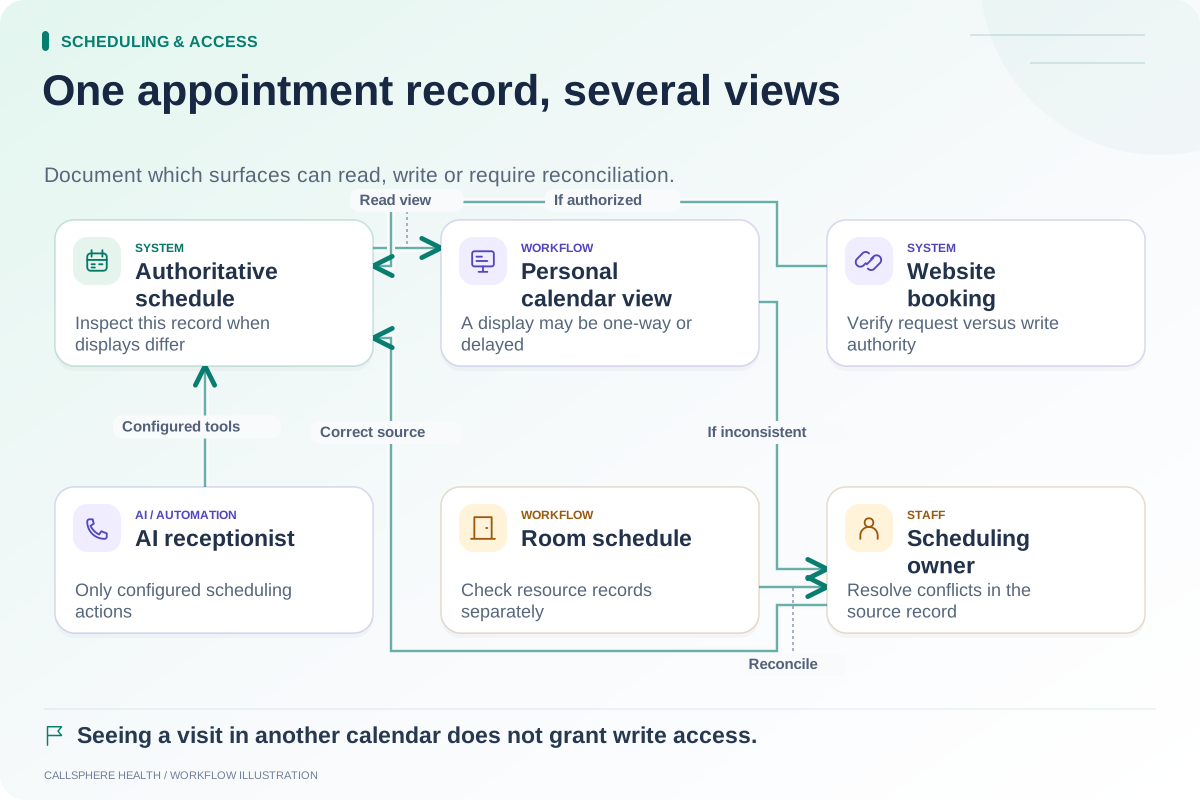
A therapy appointment that requires a room is only usable when both the clinician and the required space are available. Evaluate those constraints together. A system can correctly prevent clinician double-booking while still allowing two clinicians to reserve the same room, particularly when room information lives in a separate calendar.
Start by identifying which visit types genuinely require a specific space or resource. Avoid adding complexity for remote appointments that do not use a practice room, but do not ignore location-specific constraints that determine whether an in-person visit can occur.
Map the resources for each appointment type
Use a compact requirements table before evaluating automation.
| Appointment type | Clinician constraint | Space constraint | If unavailable |
|---|---|---|---|
| Individual in-person visit | Approved provider | Suitable private room | Offer another verified option |
| Remote visit | Approved provider | Practice-defined remote-work setup | Follow approved staff process |
| Session needing a specific room | Eligible provider | Named room or approved pool | Staff review or alternate time |
| Multi-client session | Approved facilitator | Adequate approved space | Do not exceed configured limits |
This is an operational worksheet, not a specification of clinical room standards. The practice determines suitability, accessibility and any other relevant requirements through its own procedures.
Run the two-resource conflict test
Create a synthetic appointment that reserves Clinician A and Room 1. Then try the same time with Clinician B and Room 1. If the room is exclusive, the second appointment should be blocked or require the practice's explicit conflict-handling process.
Next, try Clinician A with Room 2 at the same time. The room is free, but the clinician is not. Finally, try Clinician B with Room 2. This case checks that the system allows a genuinely available combination rather than blocking all parallel appointments.
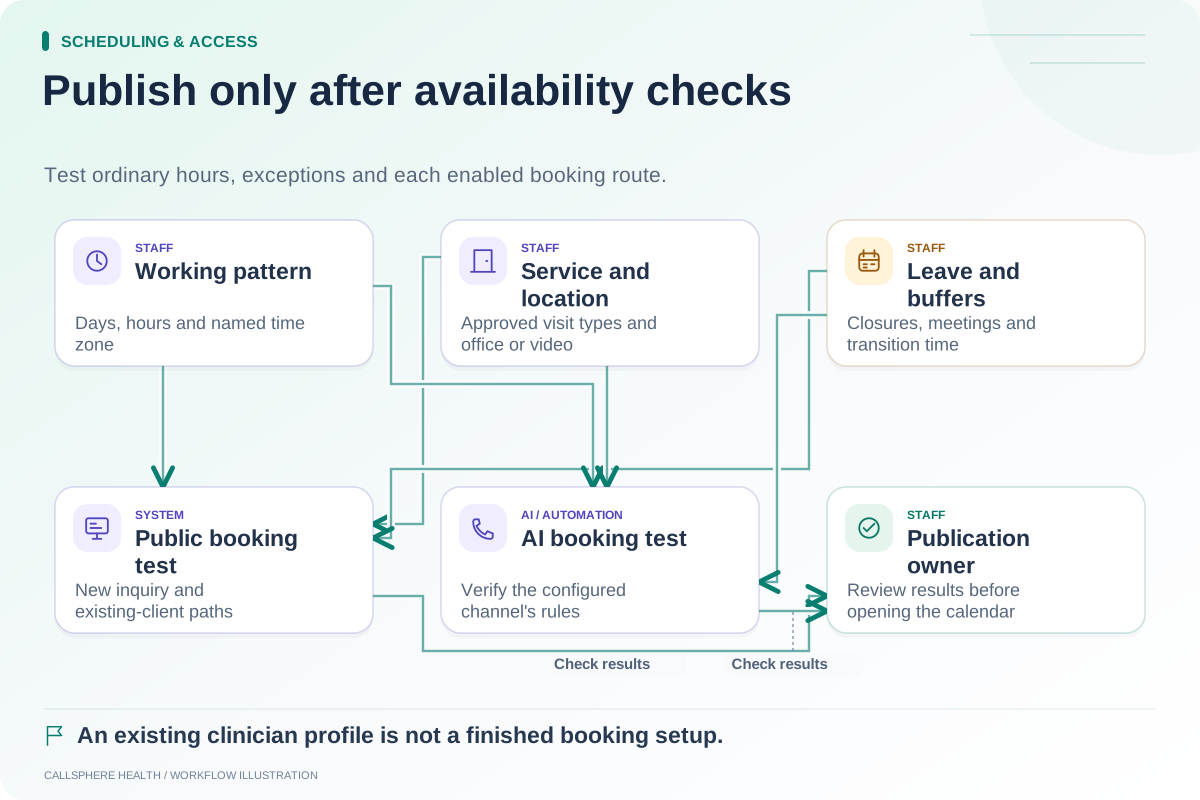
Repeat the cases through the staff calendar and any public or AI booking route you intend to enable. A rule enforced in one interface does not establish that every path uses it.
A documented resource-booking example
Jane's resource-booking documentation describes assigning required resources to treatments and checking their availability for administrative and online booking. That is a meaningful capability for a practice with constrained rooms. Ask vendors to show this combined behavior, and check the plan and setup required.
Do not infer that CallSphere Health has equivalent resource enforcement simply because it supports locations and clinician calendars. A location label is not proof of an exclusive room reservation.
A hypothetical room conflict
A fictional therapy center has three clinicians and two usable session rooms. Its calendar correctly shows that the third clinician is free at 4 p.m., but both rooms are occupied. If the booking workflow considers only the clinician, it can offer a visit the practice cannot host as planned.
The center can resolve this with demonstrated resource-aware scheduling or a documented staff approval process. It should not advertise automatic room coordination until the exact combination is verified. Moving the appointment to telehealth is not an automatic fallback unless the practice and client have appropriately agreed to that format.
Use a manual fallback honestly
If a required resource connection is unverified, keep affected appointment types behind staff review or use an approved coordinated reservation procedure. Assign one owner to reconcile the room and provider records. Avoid two employees simultaneously holding separate calendars without a defined final check.
The calendar source-of-truth guide helps identify which record controls the final decision. The clinician availability checklist ensures that resource testing is not masking an incomplete provider schedule.
Also test cancellation and rescheduling: releasing the clinician's slot should release the associated room only as intended, and moving a visit should check the replacement room. These outcomes need evidence rather than assumptions about synchronization.
CallSphere Health's platform offers connected practice-management workflows, with configuration limits described in capabilities. If room conflicts are a purchasing requirement, bring the two-resource test to a demo and ask which steps are automatic, staff-controlled or not currently verified.
More practical evaluation cases are available in Scheduling and access.
Sources and product scope checked September 9, 2026.