Choose the first administrative workflow to automate by combining useful demand with clear rules and a manageable exception path. The highest-volume task is not always the best starting point if its decisions are ambiguous or its supporting systems are not ready.
This matrix is a proposed purchasing and pilot-planning tool. It does not assign a clinical risk score or promise savings. Use actual practice observations and the available product evidence to fill it in.
Screen out unclear tasks before scoring
A candidate should have an administrative purpose, a defined successful result and a person responsible for exceptions. Clinical advice, diagnosis and treatment decisions do not become suitable for autonomous administration because they consume staff time.
Ask whether the underlying information is reliable. An AI receptionist cannot consistently explain fees if the practice has several contradictory fee lists. It cannot complete a configured booking if the appointment settings and availability source are unresolved.
Score readiness separately from benefit
| Dimension | Low readiness | Higher readiness |
|---|---|---|
| Rule clarity | Staff disagree on the next step | Written, maintained rules exist |
| Input quality | Required information is often missing | Required administrative inputs are defined |
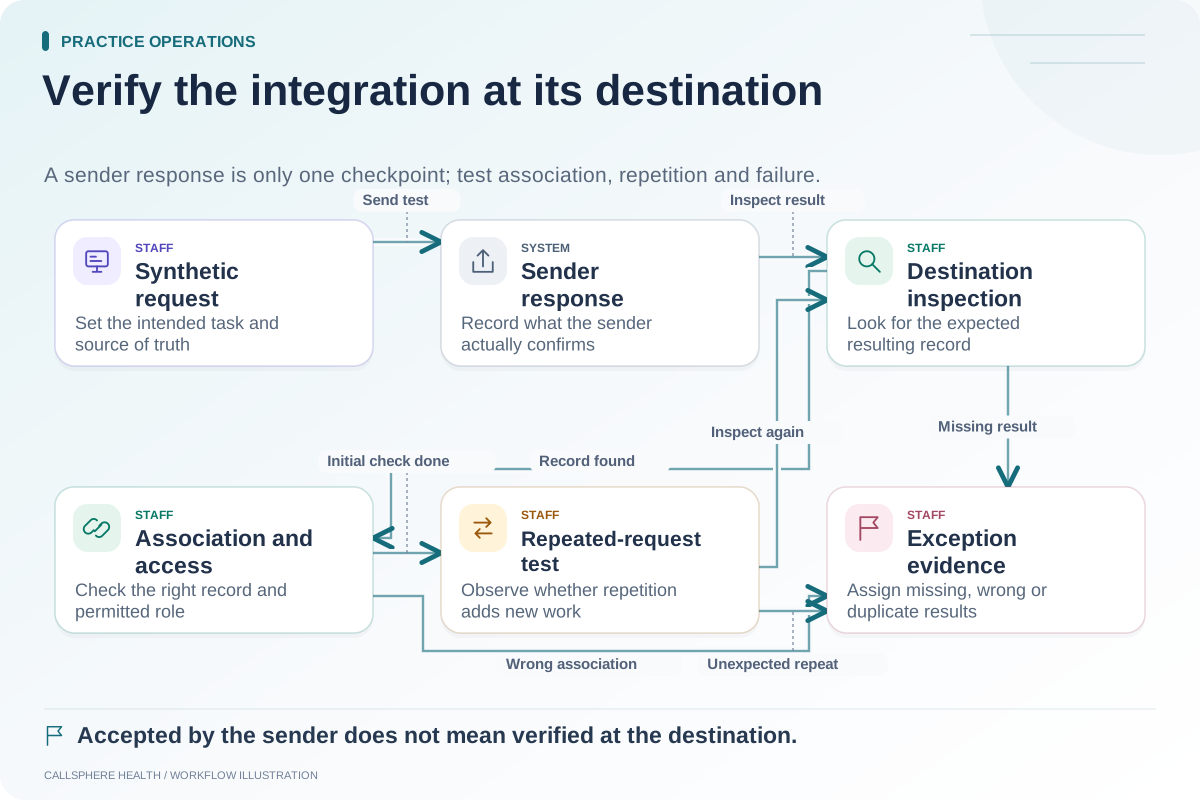
| System dependency | Connection or permission is unverified | Supported connection is tested |
| Failure visibility | An incomplete task can disappear | Staff can see the unresolved state |
| Exception ownership | No clear covering person | Named owner and backup exist |
| Reversibility | A mistake is difficult to correct | A controlled correction process exists |
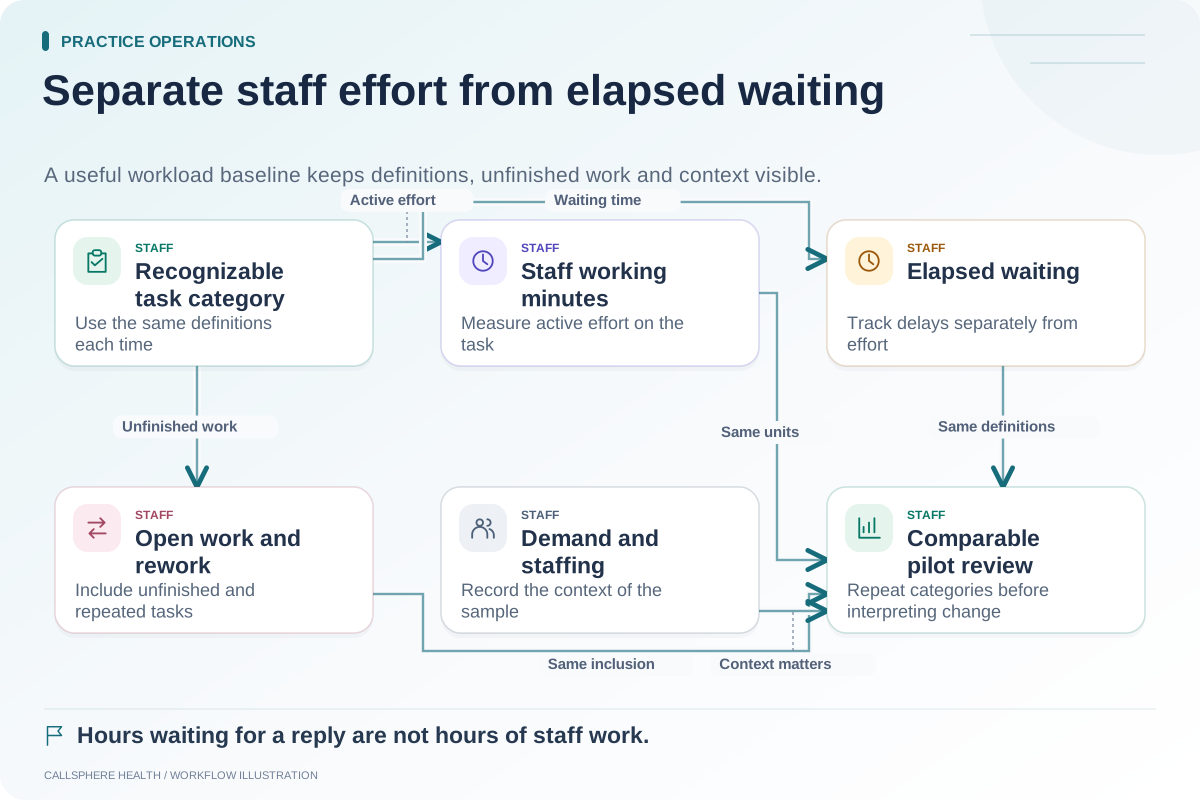
Separately record observed task frequency and staff time from a baseline. Keeping benefit and readiness apart prevents a large theoretical benefit from concealing an implementation problem.
Compare three hypothetical candidates
Hypothetical example: A practice considers office-hours answers, new appointment booking and disputed-balance conversations. Office-hours answers use a maintained knowledge source and have a straightforward fallback. Booking has useful volume but requires confirmation of provider settings. Disputed balances require authorized billing review.
The team starts with routine information, prepares a limited booking test and retains billing disputes as staff work. This is an example of sequencing, not a universal recommendation or a claim that all practices should begin with the same task.
Define the pilot as a bounded workflow
Write what is included, what is excluded, the selected channel, the staff owner and the expected end states. “Deploy AI” is too broad to evaluate. “Answer approved administrative website questions and record a staff callback when an answer is unavailable” is specific enough to test.
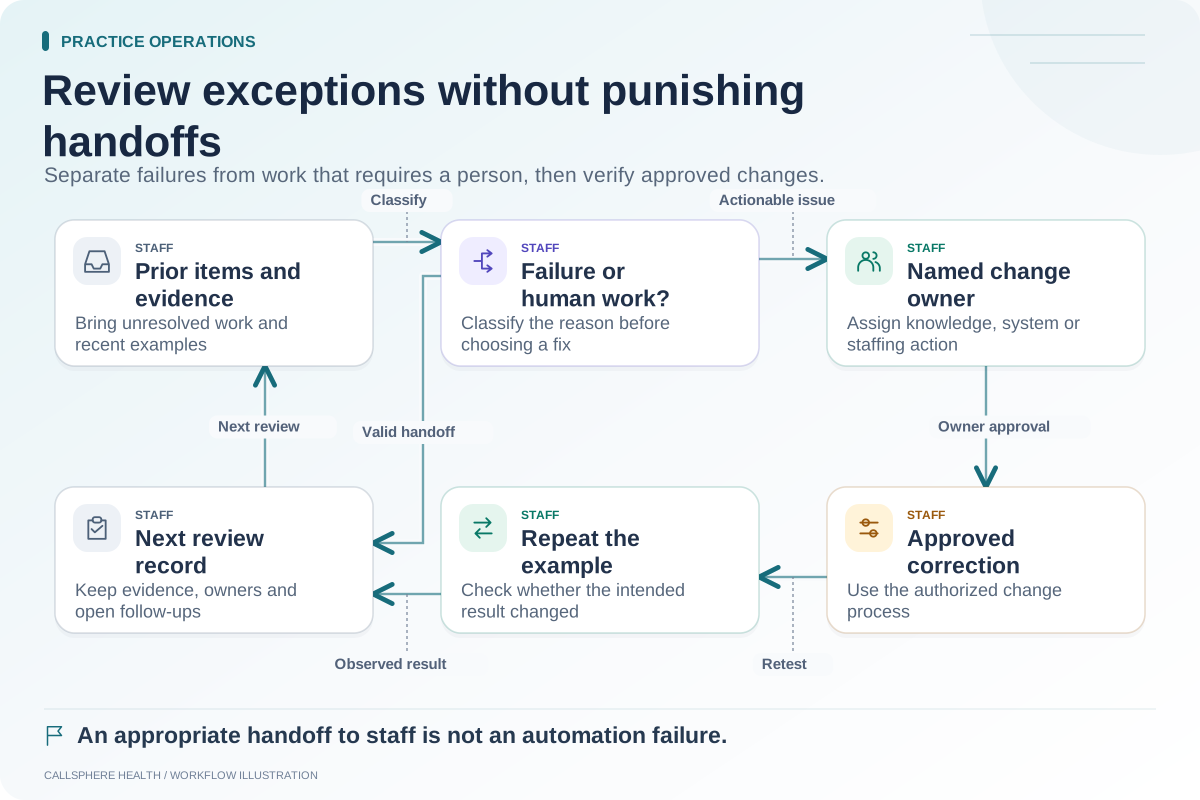
Include a failure exercise. Remove one synthetic knowledge item, request an unavailable time or simulate an unconfigured service. The test should show whether the system leaves an honest, actionable result rather than announcing success.
Match the candidate to verified product scope
CallSphere's AI front desk supports routine information and configured scheduling tools, with limitations and staff follow-up. Its capability ledger distinguishes these from clinical decisions and staff-reviewed billing work. A workflow that is implemented in code may still require account setup, service configuration or an add-on.
For background on responsible AI evaluation, see NIST's AI Risk Management Framework, reviewed September 9, 2026. The readiness matrix here is an original practical aid and is not a NIST certification or prescribed scoring system.
Decide the next step from evidence
After the pilot, record completed tasks, exceptions, corrections and unresolved questions using defined denominators. A task captured for staff follow-up is not the same as a task completed automatically. Expand scope only when the team understands both outcomes.
Start with an administrative workload baseline, then use integration testing and a weekly exception review. The full set sits in practice operations and migration.